 Essential Nose
 African Sandalwood
Osyris lanceolata
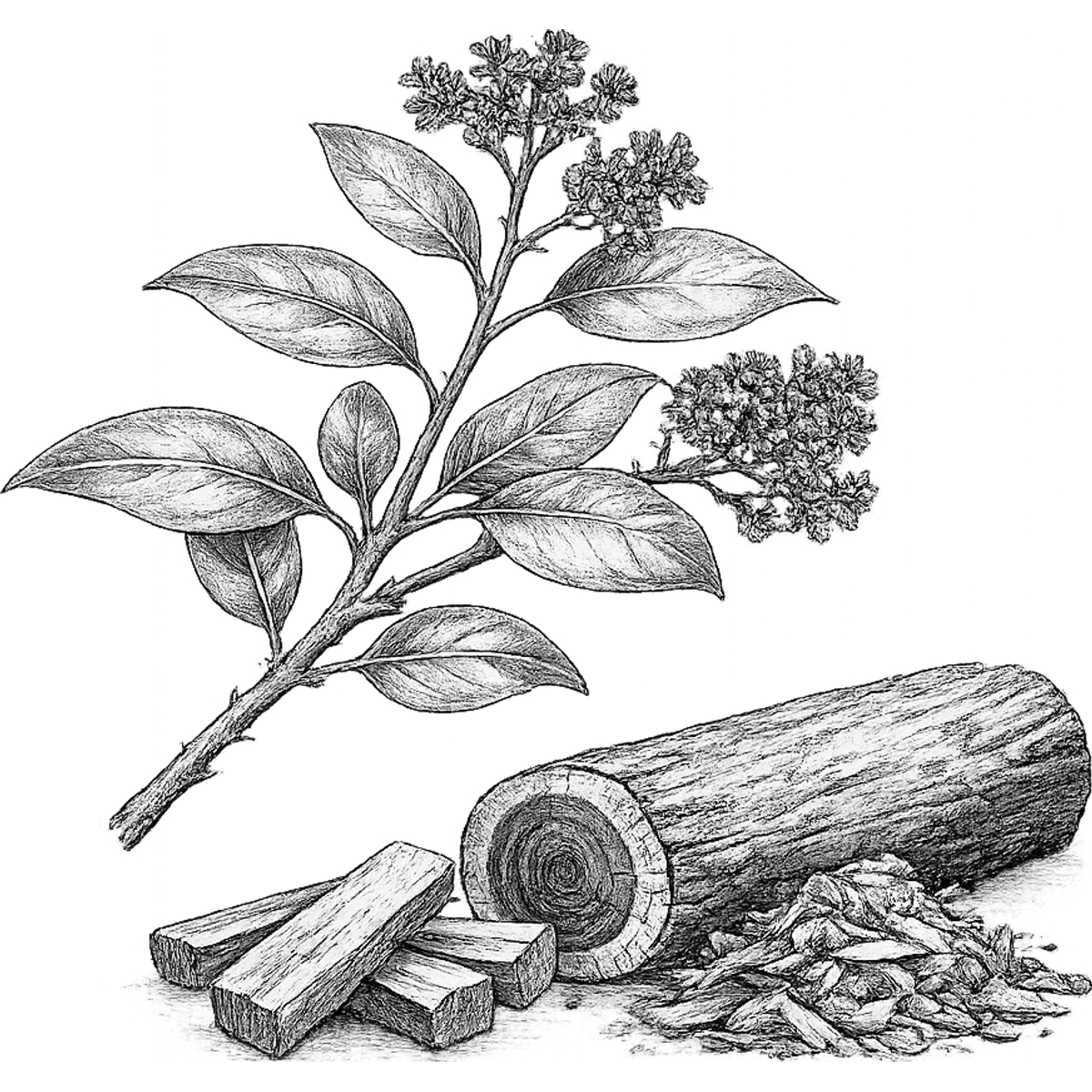
Osyris lanceolata (Hochst. & Steud.), a hemi-parasitic tree of the family Santalaceae distributed across East and southern Africa, is exploited for heartwood oil used as a sandalwood substitute in perfumery, though it is not a true Santalum species and is now classified as endangered due to overexploitation.[1] Phytochemical investigation of the closely related O. tenuifolia identified a suite of novel bisabolane- and sesquiterpene-type compounds—including tenuifolene and lanceoloxide—absent from true sandalwood oils, indicating a chemically distinct sesquiterpene profile.[2]
- Also Known As
- East African Sandalwood, Kenyan Sandalwood, African Sandalwood
- Family
- Woody
- Perfumery Note
- Base
- Intensity
- Medium
- Extraction
- Steam Distillation
- Plant Parts
- Wood
- Origins
- Kenya, Tanzania, Ethiopia
- Effect
- Grounding, Calming & Relaxing
- Aroma
- Woody, Creamy, Mild, Earthy
- Applications
- Aromatherapy, Perfumery, Massage, Skincare
- Price
- $$$$Osyris tenuifolia from East Africa is a different genus to true sandalwood; it is harvested opportunistically at small scale, keeping supply low and prices moderate without the luxury premium of Santalum species
References
- [1]Knowledge Gaps in Taxonomy, Ecology, Population Distribution Drivers and Genetic Diversity of African Sandalwood (Osyris lanceolata Hochst. & Steud.): A Scoping Review for Conservation — Mugula BB et al. Plants (Basel), 2021
- [2]Sesquiterpenes from the east African sandalwood Osyris tenuifolia — Kreipl AT et al. Phytochemistry, 2004