 Essential Nose
 Arabian Jasmine
Jasminum sambac
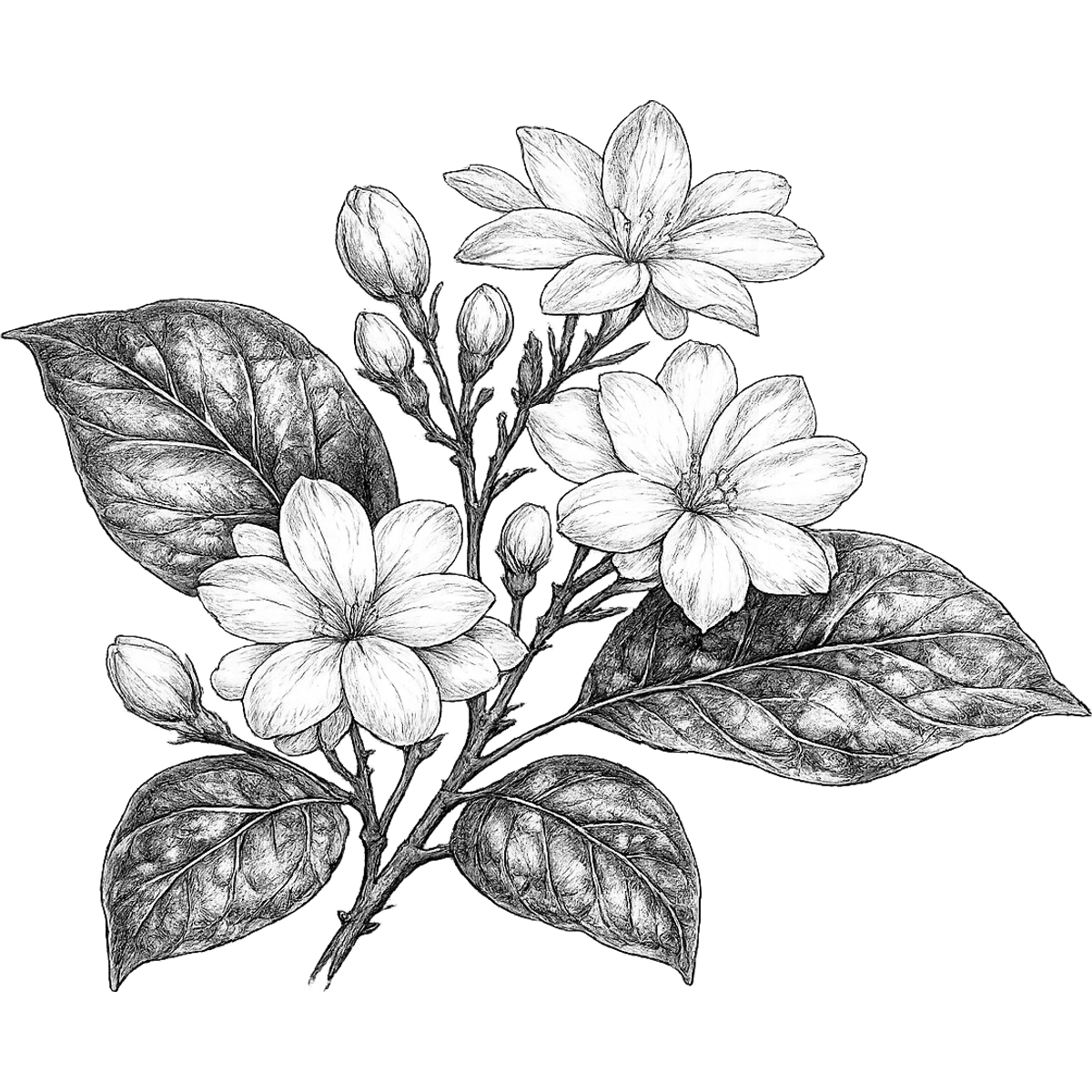
Jasminum sambac produces a richer, more intensely indolic absolute than its Spanish counterpart J. grandiflorum — a character shaped by higher levels of indole and methyl anthranilate alongside the shared key odorants benzyl acetate and linalool, the latter of which increases approximately twofold during peak blooming.[1] Sacred across South and Southeast Asia, sambac garlands are woven into religious offerings, bridal ceremonies, and Buddhist temples from India to the Philippines, making it one of the most culturally embedded aromatics in the world. A clinical network meta-analysis ranked Jasminum sambac as the single most effective essential oil for reducing state anxiety among all oils evaluated across 44 randomised controlled trials.[2]
- Also Known As
- Sambac Jasmine, Pikake, Mogra, Belle of India
- Family
- Floral
- Perfumery Note
- Middle
- Intensity
- Strong
- Extraction
- Solvent Extraction
- Plant Parts
- Flowers
- Origins
- India, Philippines, China, Indonesia
- Effect
- Uplifting, Aphrodisiac, Calming & Relaxing
- Aroma
- Sweet, Intensely Floral, Warm, Indolic, Rich
- Applications
- Aromatherapy, Perfumery, Skincare
- Price
- $$$$Jasminum sambac (sambac) absolute is produced mainly in India and Egypt in smaller volumes than grandiflorum; the more intensive harvest and limited commercial scale make it the more expensive of the two jasmine absolutes
References
- [1]An Efficient Extraction Method for Fragrant Volatiles from Jasminum sambac (L.) Ait — Ye Q, Jin X, Zhu X, et al. Journal of Oleo Science, 2015
- [2]Essential oils for treating anxiety: a systematic review of randomized controlled trials and network meta-analysis — Tan L, Liao FF, Long LZ, et al. Frontiers in Public Health, 2023