 Essential Nose
Bee Balm
Monarda fistulosa
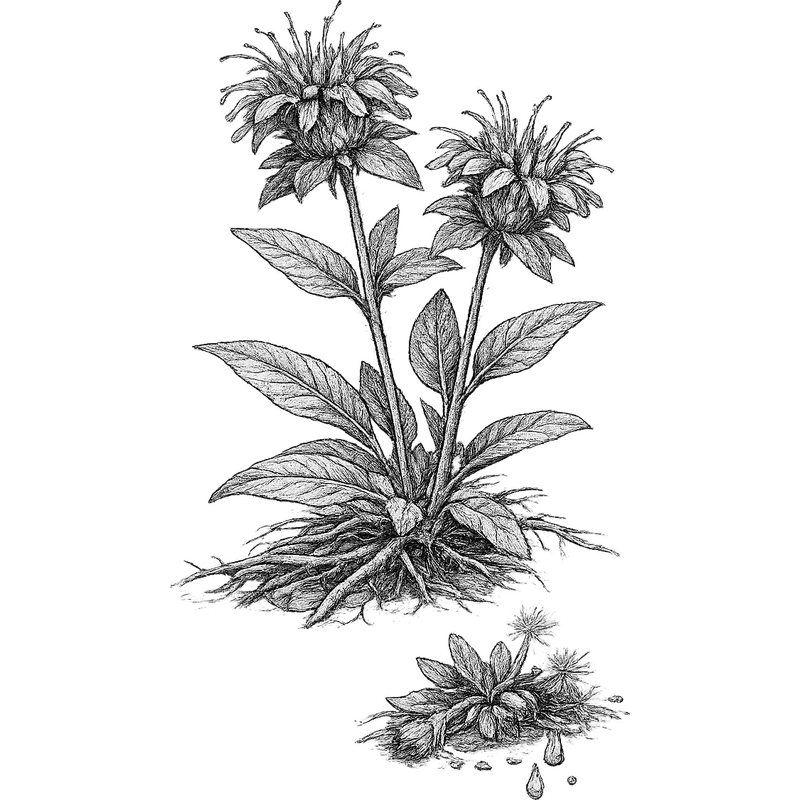
Bee balm is a North American mint that smells like thyme, warm and sharply herbal. Indigenous peoples used it for chest infections, fevers and wounds long before it reached perfumery. The oil runs on carvacrol and thymol, the same phenols that make oregano and thyme so strongly antibacterial. Those compounds switch on TRPA1, the nerve channel that reports irritation, which explains the warming, counter-irritant feel on skin.[1] Tested against mosquitoes, Monarda oils worked as repellents.[2]
- Also Known As
- Wild Bergamot, Oswego Tea, Horsemint, Wild Oregano
- Family
- Herbal
- Perfumery Note
- Middle
- Intensity
- Medium
- Extraction
- Steam Distillation
- Plant Parts
- Leaves, Flowers, Stems
- Origins
- United States, Canada, Eastern Europe
- Effect
- Respiratory Support, Energy & Uplifting
- Aroma
- Herbaceous, Spicy, Thymol-like, Warm, Earthy
- Applications
- Diffusing & Inhalation, Skincare, Household & Cleaning
- Price
- $$$$Moderately priced; the plant is widely grown across North America and Europe, making raw material accessible, though it remains a niche oil compared to mainstream herbals
References
- [1]Essential Oils from Monarda fistulosa: Chemical Composition and Activation of Transient Receptor Potential A1 (TRPA1) Channels -- Ghosh M et al. Molecules, 2020
- [2]Bioassay-guided investigation of two Monarda essential oils as repellents of yellow fever mosquito Aedes aegypti -- Tabanca N et al. Journal of Agricultural and Food Chemistry, 2013