 Essential Nose
 Cassia
Cinnamomum cassia
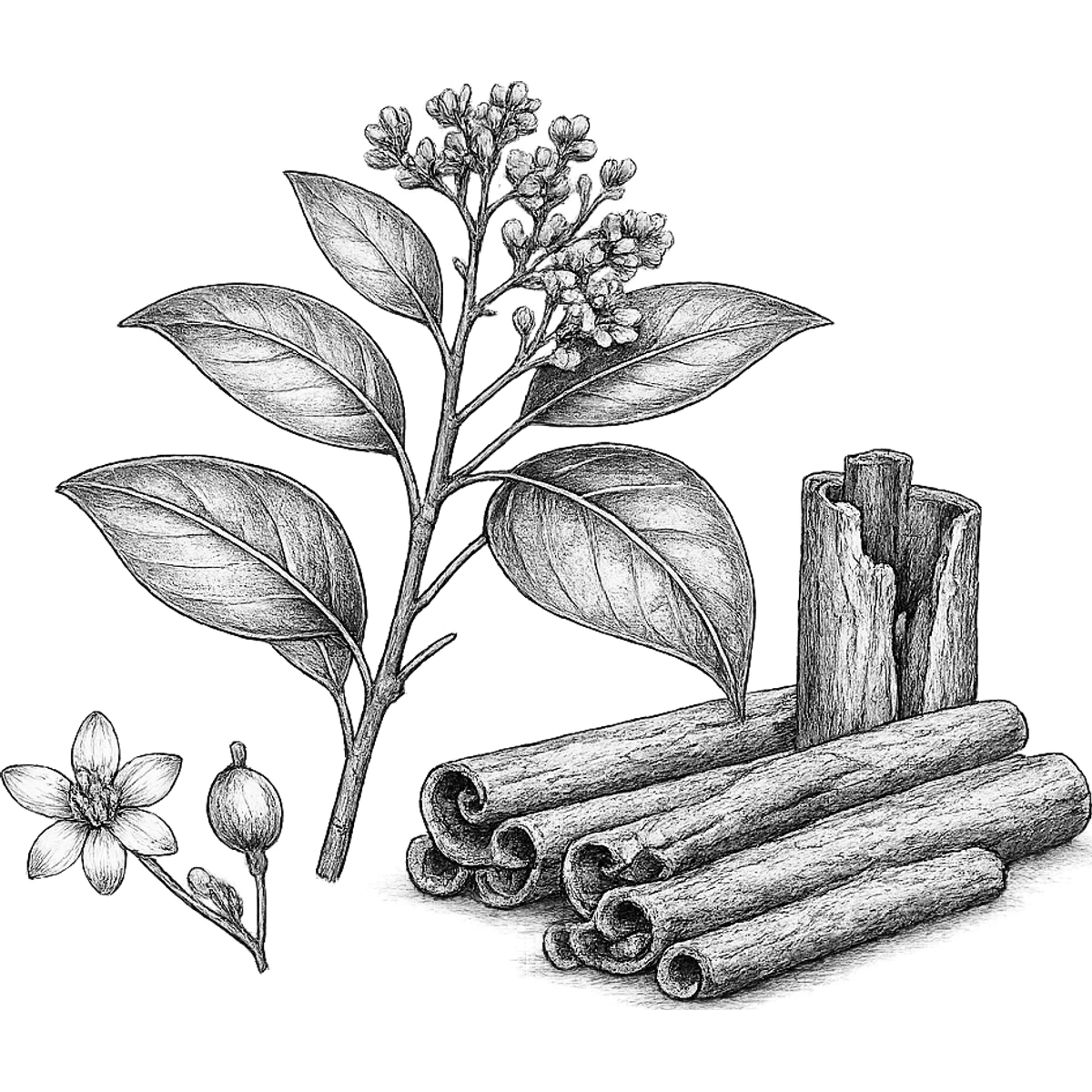
Cassia oil (Cinnamomum cassia) is cinnamaldehyde-dominant at 75-90%, but delivers a noticeably harsher, more astringent character than C. verum bark oil due to its virtual absence of the sweeter esters (benzyl acetate, cinnamyl acetate) found in true Ceylon cinnamon; this is the variety underpinning most of the world's commercial 'cinnamon' food flavouring. It stands among the most potent essential oils tested for antimicrobial activity: in vitro studies record broad-spectrum inhibition of bacteria, yeasts, moulds, and dermatophytes at low concentrations, with cinnamaldehyde identified as the primary bioactive agent.[1] Clinical-relevance is underlined by demonstrated synergistic antibacterial activity against carbapenemase-producing Klebsiella pneumoniae when combined with polymyxin B, pointing to potential utility against difficult drug-resistant pathogens.[2]
- Also Known As
- Chinese Cinnamon, Bastard Cinnamon, Cassia Cinnamon, Cinnamomum aromaticum
- Family
- Spice
- Perfumery Note
- Middle
- Intensity
- Very Strong
- Extraction
- Steam Distillation
- Plant Parts
- Bark
- Origins
- China, Vietnam, Indonesia
- Effect
- Warming & Comforting, Stimulating, Antimicrobial
- Aroma
- Spicy, Warm, Harsh, Less Complex than Ceylon
- Applications
- Aromatherapy, Culinary, Medicinal, Cleaning
- Price
- $$$$Often called "Chinese Cinnamon," it is cheaper and more abundant than true cinnamon
References
- [1]Antimicrobial activities of cinnamon oil and cinnamaldehyde from the Chinese medicinal herb Cinnamomum cassia Blume — Ooi LSM, Li Y, Kam SL, Wang H, Wong EYL, Ooi VEC. American Journal of Chinese Medicine, 2006
- [2]Synergistic effects of Cinnamomum cassia L. essential oil in combination with polymyxin B against carbapenemase-producing Klebsiella pneumoniae and Serratia marcescens — Vasconcelos NG, Queiroz JHF de S, da Silva KE, Vasconcelos PC de P, Croda J, Simionatto S. PLoS One, 2020