 Essential Nose
 Cinnamon Leaf
Cinnamomum verum
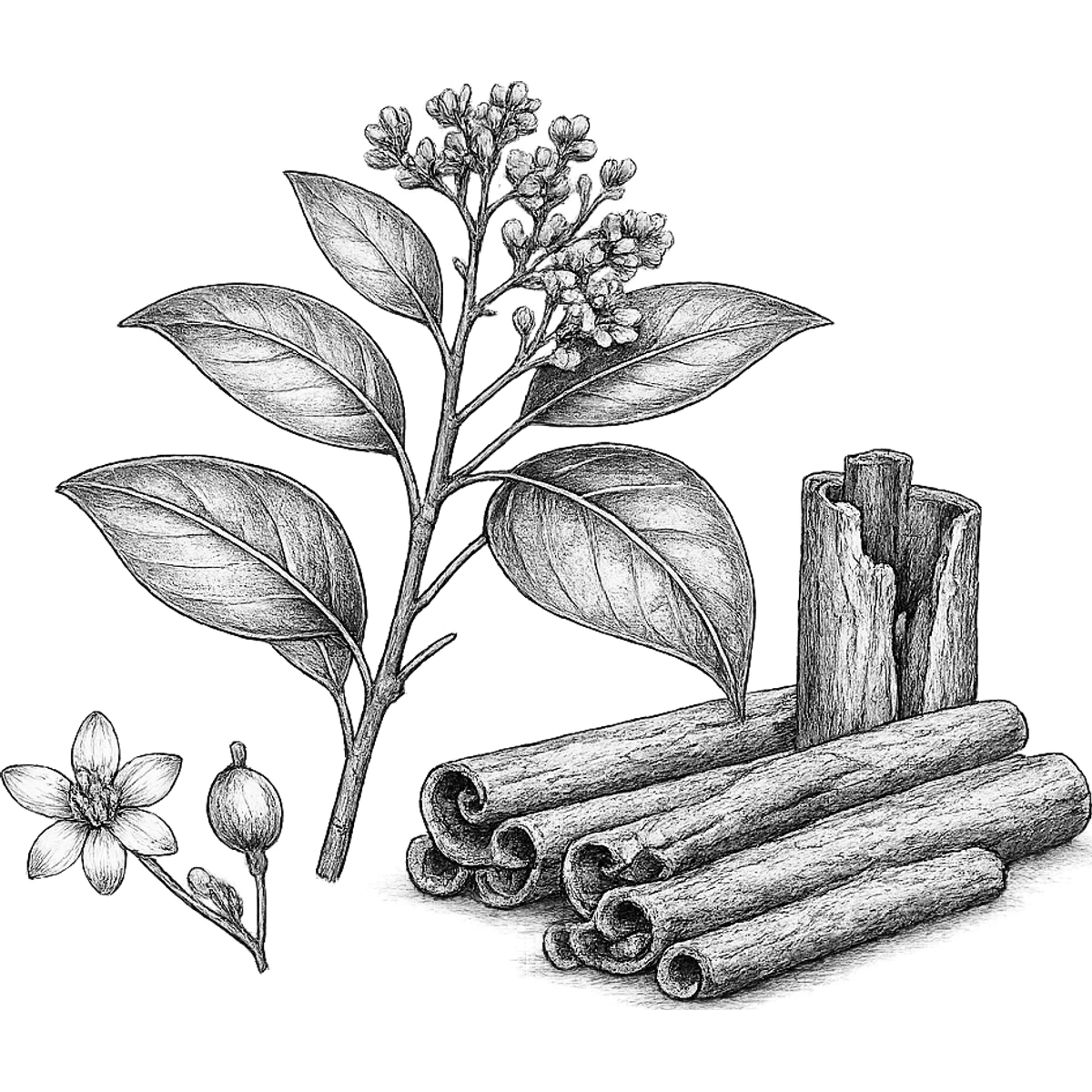
Cinnamon leaf oil from Cinnamomum verum is eugenol-dominant (70-90%), giving it a clove-like, phenolic warmth that differs markedly from the sweeter bark oil produced by the same plant — the two oils are chemically and aromatically distinct enough to be used as entirely separate materials in trade. The leaf oil has a substantially better safety profile than bark oil for topical application, though it remains a skin sensitiser and requires appropriate dilution. Antibacterial and antibiofilm activity against clinically relevant pathogens including Pseudomonas aeruginosa, Staphylococcus aureus, and Klebsiella pneumoniae has been confirmed in vitro.[1] Antifungal studies show particular efficacy against Candida biofilm infections, with the oil reducing biofilm viability at concentrations achievable in topical formulations.[2]
- Also Known As
- Ceylon Cinnamon Leaf, True Cinnamon Leaf
- Family
- Spice
- Perfumery Note
- Middle
- Intensity
- Strong
- Extraction
- Steam Distillation
- Plant Parts
- Leaves
- Origins
- Sri Lanka, India, Madagascar
- Effect
- Warming & Comforting, Antimicrobial, Analgesic
- Aroma
- Spicy, Clove-like, Warm, Less Sweet than Bark
- Applications
- Aromatherapy, Culinary, Medicinal, Cleaning
- Price
- $$$$Leaves are easily steam-distilled alongside pruning waste from cinnamon trees; the high leaf yield and minimal processing effort make leaf oil much cheaper than bark oil from the same tree
References
- [1]In-vitro Antibacterial and Antibiofilm Activity of Cinnamomum verum Leaf Oil against Pseudomonas aeruginosa, Staphylococcus aureus and Klebsiella pneumoniae — Wijesinghe GK, Feiria SB, Maia FC, Oliveira TR, Joia F, Barbosa JP, Boni GC, Höfling JF. Anais da Academia Brasileira de Ciências, 2021
- [2]Efficacy of true cinnamon (Cinnamomum verum) leaf essential oil as a therapeutic alternative for Candida biofilm infections — Wijesinghe GK, de Oliveira TR, Maia FC, Feiria SB, Barbosa JP, Joia F, Boni GC, Höfling JF. Iranian Journal of Basic Medical Sciences, 2021