 Essential Nose
Cumin
Cuminum cyminum
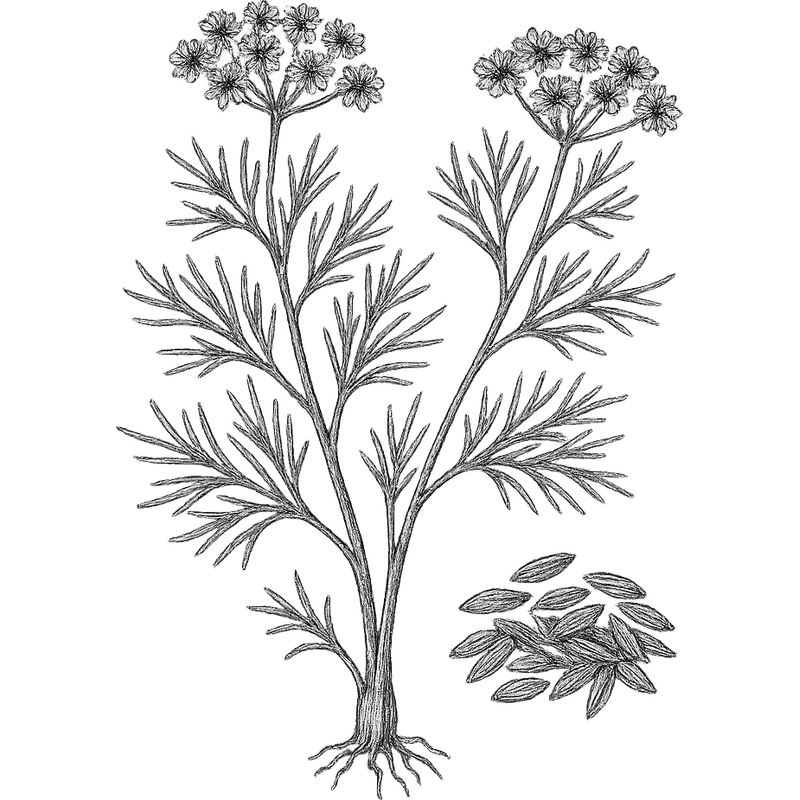
Cumin oil smells exactly like the spice, warm and slightly sweaty. Cuminaldehyde is about three tenths of it and carries most of that character. In direct comparisons it had the widest reach of any component against food-poisoning bacteria.[1] The whole oil held back a broad panel of bacteria and fungi in lab testing.[2] It is phototoxic on skin in sunlight, which surprises people who think of it as a kitchen spice.[3] Skin reactions after contact with the oil have been reported.[3]
- Also Known As
- Cumin Seed, Jeera
- Family
- Spice
- Perfumery Note
- Middle
- Intensity
- Very Strong
- Extraction
- Steam Distillation
- Plant Parts
- Seeds
- Origins
- India, Egypt, Iran
- Effect
- Grounding & Centering
- Aroma
- Spicy, Warm, Earthy
- Applications
- Diffusing & Inhalation, Perfumery & Fragrance Making, Cooking & Flavouring
- Price
- $$$$A common spice, but the oil is very potent and the seeds require significant processing
References
- [1]Antibacterial activity of cuminaldehyde on food-borne pathogens, the bioactive component of essential oil from Cuminum cyminum L. collected in Thailand - Phasomkusolsil S et al. Southeast Asian J Trop Med Public Health, 2019
- [2]Chemical composition and antimicrobial activity of cumin oil (Cuminum cyminum, Apiaceae) - Singh G et al. Nat Prod Commun, 2010
- [3]Cumin - Drugs and Lactation Database (LactMed), National Institute of Child Health and Human Development, 2006