 Essential Nose
 Frankincense Sacra
Boswellia sacra
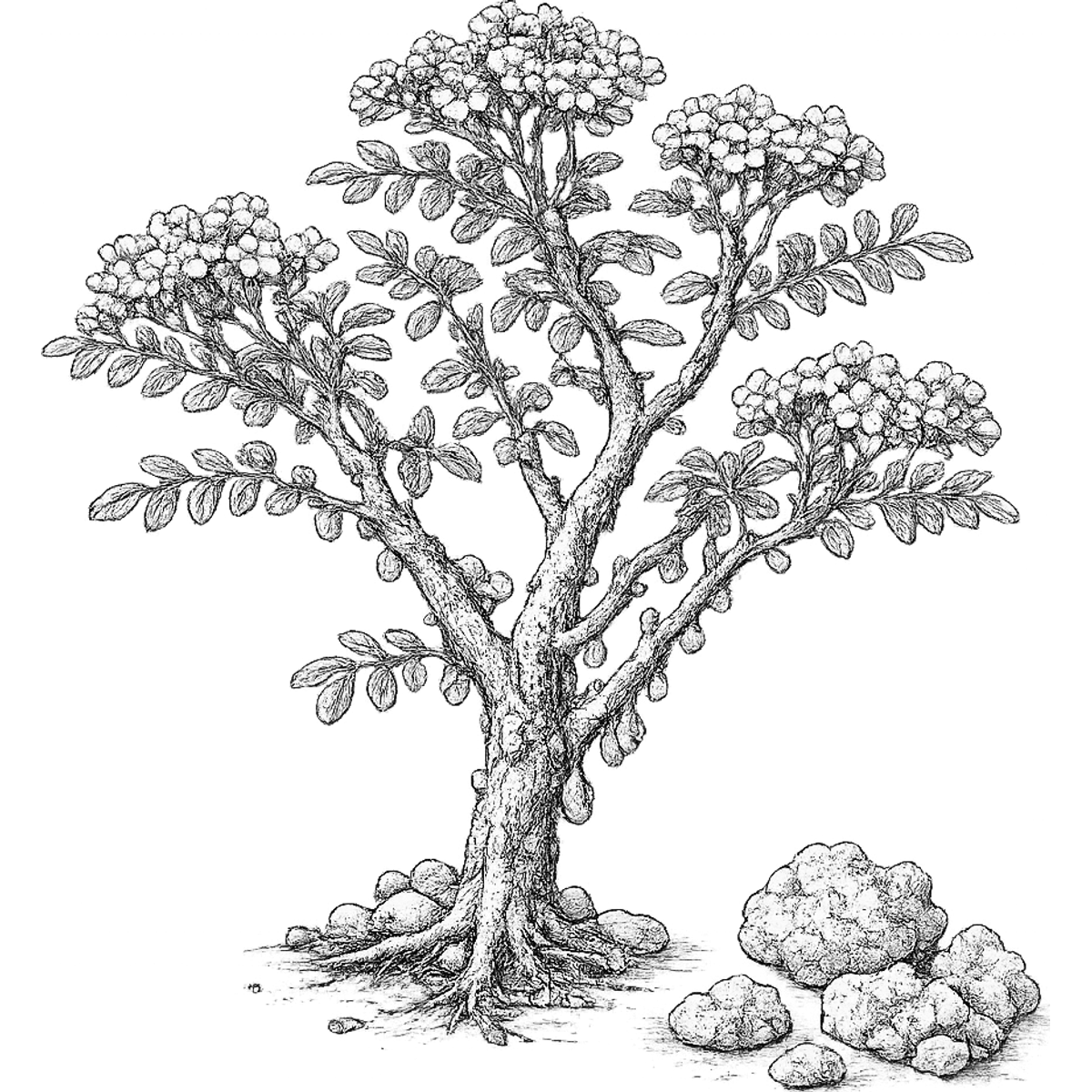
Boswellia sacra, the prized Omani luban, produces an essential oil distinguished by an exceptionally high alpha-pinene content — confirmed as the principal component across all four commercial grades in one study — alongside limonene and myrcene, which together create a cleaner, more citrus-forward top note than the East African species.[1] Its taxonomic relationship to B. carterii has long been debated, with some authors treating them as conspecific; the Omani provenance and predominantly alpha-pinene chemotype are now the key distinguishing markers for the sacra designation. Research on the whole essential oil found that B. sacra induced tumour cell-specific apoptosis in cultured human breast cancer cell lines while leaving normal breast cells comparatively unaffected, pointing to bioactive constituents beyond the common monoterpenes.[2]
- Also Known As
- Hougary Frankincense, Omani Frankincense, Sacred Frankincense, Royal Frankincense
- Family
- Resinous
- Perfumery Note
- Base
- Intensity
- Medium
- Extraction
- Steam Distillation
- Plant Parts
- Resin
- Origins
- Oman, Yemen, Somalia
- Effect
- Meditative, Grounding, Spiritual
- Aroma
- Balsamic, Citrusy, Clean, Slightly Sweet
- Applications
- Aromatherapy, Perfumery, Skincare, Medicinal, Massage
- Price
- $$$$Boswellia sacra from Oman is considered the premium grade; controlled regional exports and strong demand from luxury and religious markets push the price above other frankincense species
References
- [1]Composition and antibacterial activity of the essential oils of four commercial grades of Omani luban, the oleo-gum resin of Boswellia sacra FLUECK — Al-Saidi S et al. Chemistry & Biodiversity, 2012
- [2]Boswellia sacra essential oil induces tumor cell-specific apoptosis and suppresses tumor aggressiveness in cultured human breast cancer cells — Suhail MM et al. BMC Complementary and Alternative Medicine, 2011