 Essential Nose
 German Chamomile
Matricaria chamomilla
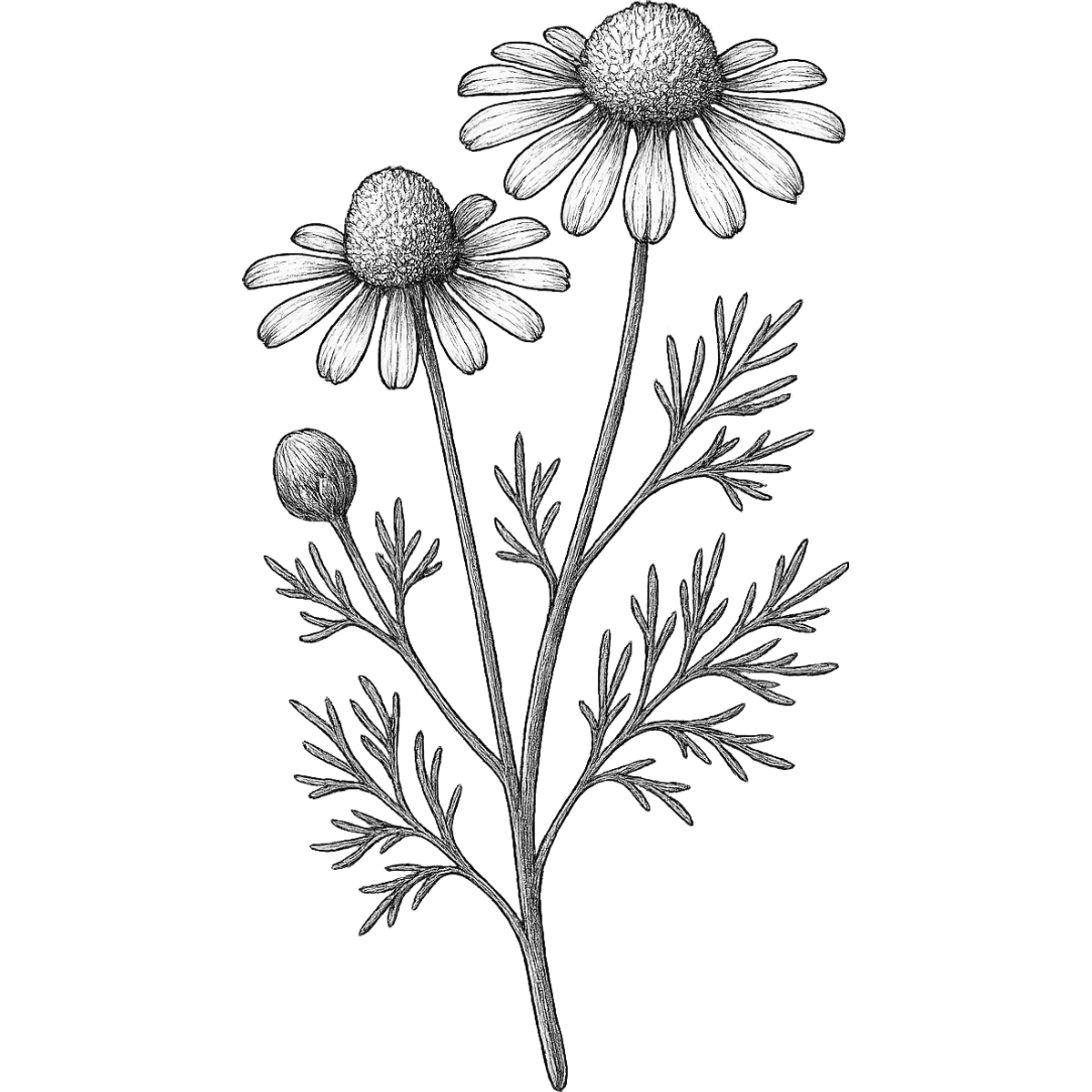
German chamomile is immediately distinguished by its deep indigo-blue colour, produced when the sesquiterpene precursor matricine cyclises and dehydrates during steam distillation to form chamazulene — a compound absent from the fresh plant but responsible for both the oil's vivid hue and its potent anti-inflammatory signature. Chamazulene and a-bisabolol, the oil's other principal constituent, inhibit cyclooxygenase and lipoxygenase pathways, making German chamomile one of the most well-studied essential oils for inflammatory conditions.[1] A comprehensive study of chamomile's therapeutic applications confirmed the breadth of its pharmacological profile — spanning anti-inflammatory, antioxidant, antimicrobial, and CNS-modulatory effects — cementing its status as among the most clinically investigated botanicals in the herbal medicine canon.[2]
- Also Known As
- Blue Chamomile, Hungarian Chamomile, Matricaria
- Family
- Floral
- Perfumery Note
- Middle
- Intensity
- Medium
- Extraction
- Steam Distillation
- Plant Parts
- Flowering tops
- Origins
- Germany, Hungary, Egypt, Bulgaria, Morocco
- Effect
- Anti-inflammatory, Calming & Relaxing, Soothing
- Aroma
- Sweet, Herbaceous, Apple-like, Warm
- Applications
- Aromatherapy, Skincare, Medicinal, Bath & Body, Massage
- Price
- $$$$Matricaria chamomilla is widely cultivated in Eastern Europe but the small flower heads still yield under 0.5% oil; high demand for the distinctive blue oil sustains a premium price despite broad cultivation
References
- [1]Chamomile (Matricaria chamomilla L.): A Review of Ethnomedicinal Use, Phytochemistry and Pharmacological Uses — El Mihyaoui A, Esteves da Silva JCG, Charfi S, et al. Life (Basel), 2022
- [2]A Comprehensive Study of Therapeutic Applications of Chamomile — Sah A, Naseef PP, Kuruniyan MS, et al. Pharmaceuticals (Basel), 2022