 Essential Nose
 Ginger CO2
Zingiber officinale
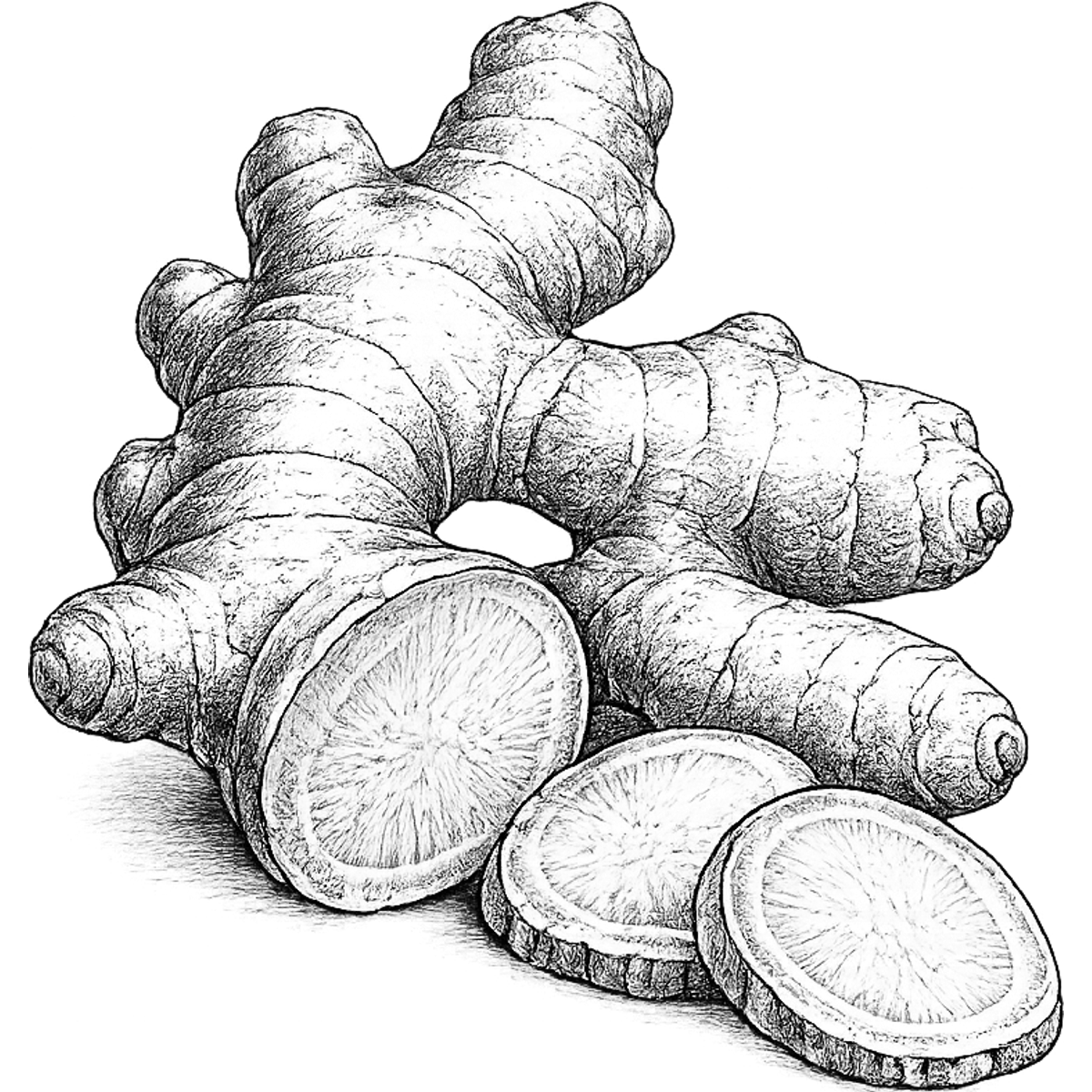
Ginger CO2 extract, produced via supercritical carbon dioxide extraction at ~31°C from Zingiber officinale rhizomes, retains substantially higher concentrations of 6-gingerol and related pungent phenylalkanol compounds than conventional steam-distilled oil, because the low-temperature process minimises heat-driven conversion of gingerols to shogaols — a transformation that occurs readily above 60°C during steam distillation.[1] The result is an aroma dramatically closer to freshly cut ginger root: richer, more complex, more resinous, and heavier than the lighter, zingiberene-dominant character of steam-distilled oil. Transdermal and pharmacological studies confirm that 6-gingerol retained in CO2 extracts is the primary bioactive underpinning anti-nausea, anti-inflammatory, and antioxidant applications, making the CO2 form preferred where higher gingerol bioavailability is therapeutically relevant.[2]
- Also Known As
- CO2 Ginger Extract, Supercritical Ginger, Ginger Oleoresin
- Family
- Spice
- Perfumery Note
- Middle
- Intensity
- Strong
- Extraction
- CO2 Extraction
- Plant Parts
- Rhizome
- Origins
- India, Madagascar, China
- Effect
- Warming & Grounding, Digestive Support
- Aroma
- Warm, Spicy, Rich, Root-like, Earthy
- Applications
- Aromatherapy, Digestive Support, Perfumery, Natural Medicine
- Price
- $$$$Supercritical CO2 extraction requires specialised high-pressure equipment and higher input costs than steam distillation; significantly more expensive per unit volume
References
- [1]Impact of drying and extractions processes on the recovery of gingerols and shogaols, the main bioactive compounds of ginger — Brindzová L et al. Plants, 2022
- [2]Assay of 6-gingerol in CO2 supercritical fluid extracts of ginger and evaluation of its sustained release from a transdermal delivery system across rat skin — Wang C et al. International Journal of Pharmaceutics, 2014