 Essential Nose
Grapefruit
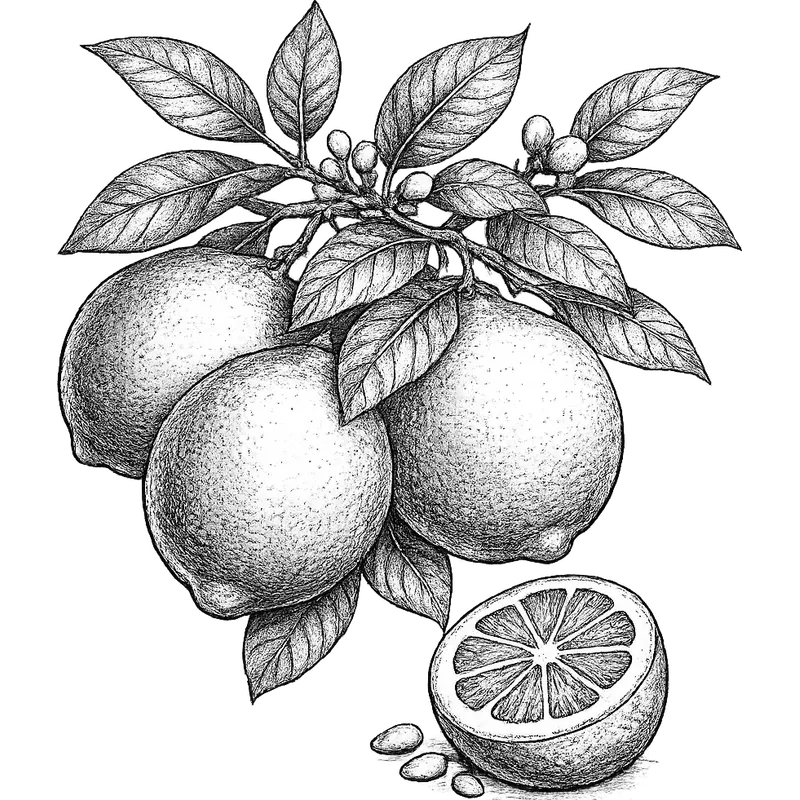
Grapefruit oil is pressed from the peel and is more than nine tenths limonene. What makes it smell of grapefruit rather than orange is nootkatone, a trace compound carrying all the bitterness. Limonene is among the best-studied fragrance compounds, with a long safety record in food and cosmetics.[1] The peel oil also carries furanocoumarins, the compounds behind the famous grapefruit and medication problem.[2] They also make skin burn in sunlight, so keep it off skin that will see the sun.[3]
Pink Grapefruit
Citrus paradisi
- Also Known As
- Ruby Red Grapefruit, Pink Pomelo
- Family
- Citrus
- Perfumery Note
- Top
- Intensity
- Medium
- Extraction
- Cold Pressed
- Plant Parts
- Fruit peel
- Origins
- United States, Israel, Argentina
- Effect
- Energy & Uplifting, Focus & Mental Clarity
- Aroma
- Citrus, Sweet, Fruity, Fresh
- Applications
- Diffusing & Inhalation, Skincare, Perfumery & Fragrance Making, Household & Cleaning
- Price
- $$$$Cold-pressed from pink grapefruit peel as a byproduct of the juice industry; enormous global production volumes make it one of the most affordable citrus oils
Pink grapefruit oil is pressed from the peel of red-fleshed varieties, and is softer and sweeter than white. Like all grapefruit oil it is over nine tenths limonene. The character comes from nootkatone, which is present in tiny amounts but does nearly all the smelling.[4] Of the grapefruit types compared in one study, the pink oils showed the strongest effect on the enzymes that drive swelling.[5] Like all pressed citrus peel oil, it burns skin in sunlight.[3]
White Grapefruit
Citrus paradisi
- Also Known As
- Marsh Grapefruit, Common Grapefruit
- Family
- Citrus
- Perfumery Note
- Top
- Intensity
- Medium
- Extraction
- Cold Pressed
- Plant Parts
- Fruit peel
- Origins
- United States, South Africa
- Effect
- Energy & Uplifting, Focus & Mental Clarity
- Aroma
- Citrus, Fresh, Tart, Clean
- Applications
- Diffusing & Inhalation, Skincare, Perfumery & Fragrance Making, Household & Cleaning
- Price
- $$$$White grapefruit is less widely cultivated than pink varieties; smaller juice industry volumes mean less peel available for cold-pressing and a modest price premium over pink grapefruit oil
White grapefruit is the tart one, cleaner and sharper than pink. It is almost entirely limonene, over 97% of the terpene part of the oil.[6] Just 24 compounds make up virtually the whole thing, and the handful that carry the smell, including nootkatone, are a tiny fraction of it.[6] In lab tests the oil held back E. coli, Staphylococcus aureus and other bacteria.[6] Like other cold-pressed citrus peel oils it is phototoxic, so keep it off skin before sun.[3]
References
- [1]D-Limonene: safety and clinical applications - Sun J. Alternative Medicine Review, 2007
- [2]Inhibition of cytochrome P450 by furanocoumarins in grapefruit juice and herbal medicines - Guo LQ, Yamazoe Y. Acta Pharmacologica Sinica, 2004
- [3]A study of the phototoxicity of lemon oil - Naganuma M, Hirose S, Nakayama Y, Nakajima K, Someya T. Archives of Dermatological Research, 1985
- [4]Volatile Constituents of Redblush Grapefruit (Citrus paradisi) and Pummelo (Citrus grandis) Peel Essential Oils from Kenya - Njoroge SM et al. Journal of Agricultural and Food Chemistry, 2005
- [5]Chemical Profiling, Toxicity and Anti-Inflammatory Activities of Essential Oils from Three Grapefruit Cultivars from KwaZulu-Natal in South Africa - Miya G et al. Molecules, 2021
- [6]Chemical Composition, Antimicrobial, Antioxidant, and Antiproliferative Properties of Grapefruit Essential Oil Prepared by Molecular Distillation - Deng W et al. Molecules, 2020