 Essential Nose
 Haitian Vetiver
Vetiveria zizanioides
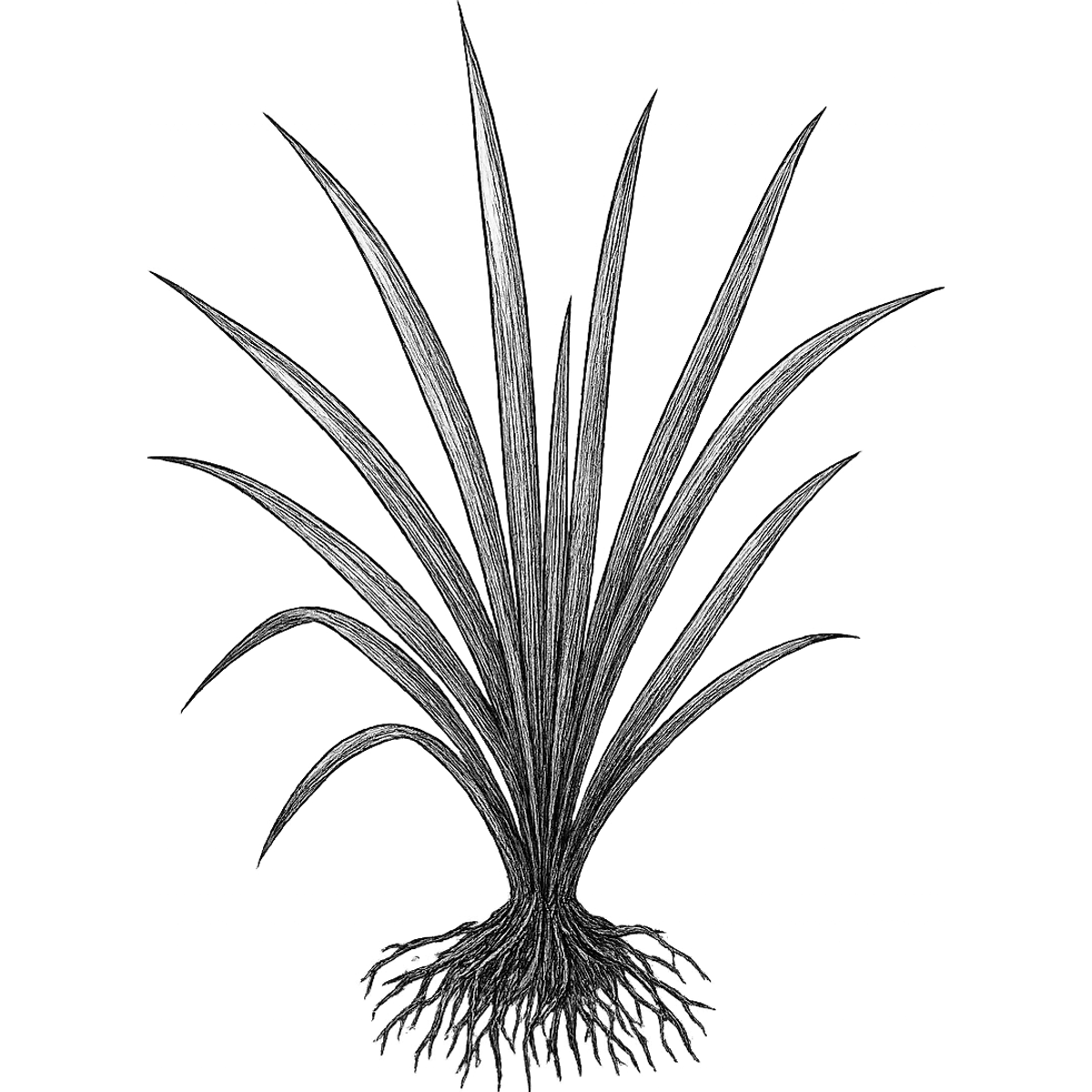
Haitian vetiver is distilled from Chrysopogon zizanioides roots cultivated in the Artibonite Valley and surrounding highlands of Haiti — the country's largest agricultural export. Compared to Réunion Bourbon vetiver, the Haitian oil is smokier, earthier, and more raw in character, with higher proportions of khusimol and zingiberenol alongside vetiselinenol and isovalencenol; the overall impression is more primitive and ashy, with a pronounced dry smokiness that perfumers prize for tenacious, deeply rooted base-note anchoring. Studies confirm broad-spectrum antimicrobial activity against Gram-positive bacteria such as Staphylococcus aureus, as well as antioxidant properties.[1][2]
- Also Known As
- Khus, Vetivert
- Family
- Woody
- Perfumery Note
- Base
- Intensity
- Strong
- Extraction
- Steam Distillation
- Plant Parts
- Roots
- Origins
- Haiti
- Effect
- Calming & Relaxing, Grounding & Centering
- Aroma
- Earthy, Woody, Smoky
- Applications
- Aromatherapy, Perfumery, Skincare, Massage
- Price
- $$$$Haiti is the world's largest producer of vetiver oil; large-scale steam distillation of Chrysopogon zizanioides roots makes Haitian vetiver the most widely traded and affordable vetiver variant
References
- [1]Chemical Composition, Antioxidant, and Antimicrobial Activities of Vetiveria zizanioides Essential Oil Extracted by Carbon Dioxide Expanded Ethanol — David A et al. Molecules, 2019
- [2]Seasonal phytochemical study and antimicrobial potential of Vetiveria zizanioides roots — Dos Santos DS et al. Acta Pharmaceutica, 2014