 Essential Nose
Lavender
Genus Lavandula
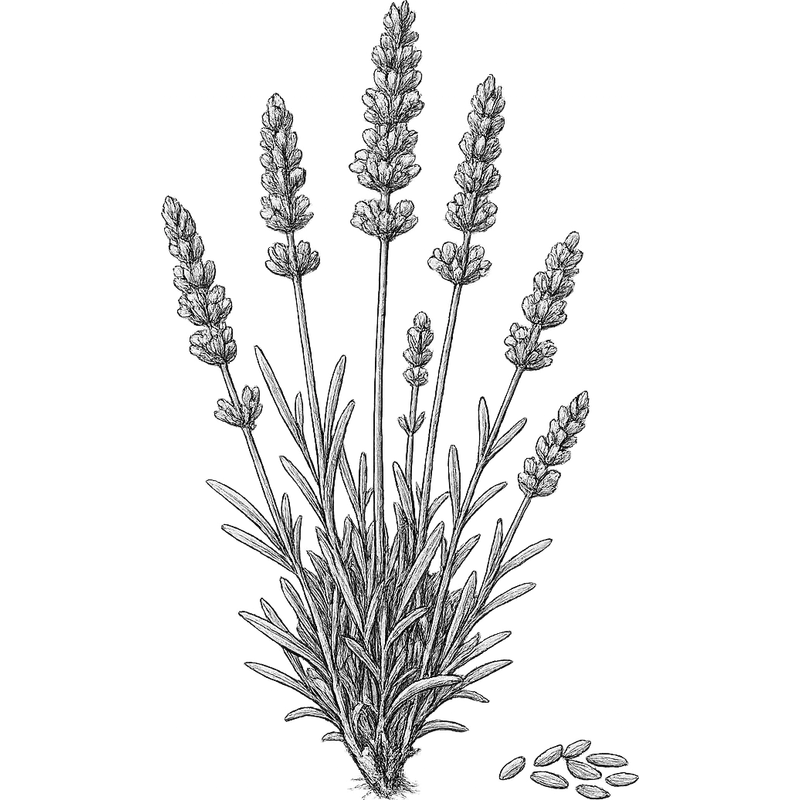
Lavender is not one plant but more than 45, a genus of shrubs spread from the Mediterranean to India, and part of the mint family. The oils differ more than the shared name suggests, from the sweet, sleepy softness of true lavender to the sharp camphor of spike lavender. Reviews credit them with activity against bacteria and fungi.[1] Pooling 65 randomised trials covering nearly 8,000 people found that breathing lavender in reduced anxiety.[2] The authors judged most of those trials poorly run, so they call the inhalation evidence suggestive rather than settled.[2]
True Lavender
Lavandula angustifolia
- Also Known As
- English Lavender, Fine Lavender, Common Lavender
- Family
- Floral
- Perfumery Note
- Middle
- Intensity
- Medium
- Extraction
- Steam Distillation
- Plant Parts
- Flowering tops
- Origins
- France, Bulgaria, England
- Effect
- Sleep & Relaxation
- Aroma
- Floral, Fresh, Herbaceous, Sweet
- Applications
- Diffusing & Inhalation, Skincare, Massage & Body, Perfumery & Fragrance Making
- Price
- $$$$"Butterfly Lavender" has a higher camphor content and a different growth cycle than true lavender
This is the lavender people picture: soft, sweet and faintly grassy, the one that turns up in pillow sprays and bath oil. It is the most studied of the family, and the most used in aromatherapy. In animal studies, simply breathing it in lowered the signs of anxiety.[3] In a trial of people with both diabetes and insomnia, regular use improved how well they slept and how they felt day to day.[4]
Lavandin
Lavandula x intermedia
- Also Known As
- Dutch Lavender, Bastard Lavender
- Family
- Floral
- Perfumery Note
- Middle
- Intensity
- Medium
- Extraction
- Steam Distillation
- Plant Parts
- Flowering tops
- Origins
- France, Spain, Croatia
- Effect
- Energy & Uplifting, Respiratory Support
- Aroma
- Floral, Camphoraceous, Herbaceous
- Applications
- Diffusing & Inhalation, Skincare, Massage & Body, Perfumery & Fragrance Making, Household & Cleaning
- Price
- $$$$The most common commercial lavender hybrid; extremely hardy with a very high oil yield
Lavandin is a cross between true lavender and spike lavender, and like most hybrids it cannot set seed. It smells like lavender with the volume turned up, brighter and sharper, because it carries far more camphor than true lavender.[5] That makes it clearing rather than calming, the one to reach for when you want your head to feel open. Research finds it protects cells from damage, works against bacteria, and shows promise for the nervous system.[6]
Spike Lavender
Lavandula latifolia
- Also Known As
- Broad-leaved Lavender, Portuguese Lavender
- Family
- Floral
- Perfumery Note
- Top
- Intensity
- Medium
- Extraction
- Steam Distillation
- Plant Parts
- Flowering tops
- Origins
- Spain, Portugal, France
- Effect
- Energy & Uplifting, Respiratory Support
- Aroma
- Camphoraceous, Herbaceous, Fresh
- Applications
- Diffusing & Inhalation, Massage & Body
- Price
- $$$$Lavandula latifolia yields a high-camphor oil in abundance across Mediterranean hillsides; widely available and less prized in fine perfumery than true lavender
Spike lavender is the bracing one, closer in feel to rosemary than to a pillow spray. The difference is camphor, the compound that makes a chest rub feel cold in your nose. Where true lavender settles you, this one clears your head and loosens tired muscles. In lab tests, pairing the oil with extra camphor worked better against Staphylococcus aureus and Listeria than either did alone.[7] Both are bacteria behind food poisoning and wound infections.
Spanish Lavender
Lavandula stoechas
- Also Known As
- French Lavender, Topped Lavender, Italian Lavender
- Family
- Floral
- Perfumery Note
- Middle
- Intensity
- Medium
- Extraction
- Steam Distillation
- Plant Parts
- Flowering tops
- Origins
- Spain, Morocco, Turkey
- Effect
- Respiratory Support, Sleep & Relaxation
- Aroma
- Camphoraceous, Sweet, Herbaceous
- Applications
- Diffusing & Inhalation, Massage & Body, Perfumery & Fragrance Making
- Price
- $$$$Lavandula stoechas grows prolifically across the Iberian Peninsula with a decent oil yield, but its strong camphor-heavy scent limits demand in fine perfumery, keeping the price modest
Spanish lavender is the one with the little purple flags on top of each flower head, and it smells nothing like the others. Fenchone gives it a sharp, almost medicinal bite, more camphor than sweetness. It has long been used to calm seizures. Pharmacology studies found a plausible mechanism, since it blocks the calcium channels nerve cells use to fire.[8] Oils from several wild Moroccan populations also held back Candida, the yeast behind thrush.[9]
Bulgarian Lavender
Lavandula angustifolia
- Also Known As
- Bulgarian True Lavender, Bulgarian Fine Lavender
- Family
- Floral
- Perfumery Note
- Middle
- Intensity
- Medium
- Extraction
- Steam Distillation
- Plant Parts
- Flowering tops
- Origins
- Bulgaria
- Effect
- Sleep & Relaxation, Grounding & Centering
- Aroma
- Floral, Sweet, Herbaceous, Honey-like
- Applications
- Diffusing & Inhalation, Skincare, Massage & Body, Perfumery & Fragrance Making
- Price
- $$$$Lavandula angustifolia from Bulgaria's Rose Valley is considered among the finest true lavenders; the cool highland climate produces a particularly delicate aroma that commands a slight premium
Bulgaria grows true lavender mostly in the Rose Valley, and the oil it yields is sweet and honeyed rather than sharp. Two compounds do most of that work: linalool, which smells soft and slightly soapy, and linalyl acetate, which adds the fruity sweetness. Together they make up over half the oil. Analysis of seven commercial Bulgarian batches picked out 111 separate compounds and found every one sat inside the official range for genuine lavender.[10]
Lavandin Abrialis
Lavandula x intermedia 'Abrialis'
- Also Known As
- Abrialis Lavandin
- Family
- Floral
- Perfumery Note
- Middle
- Intensity
- Medium
- Extraction
- Steam Distillation
- Plant Parts
- Flowering tops
- Origins
- France
- Effect
- Energy & Uplifting, Respiratory Support
- Aroma
- Floral, Camphoraceous, Herbaceous, Sharp
- Applications
- Diffusing & Inhalation, Skincare, Massage & Body, Perfumery & Fragrance Making
- Price
- $$$$The most common commercial lavender hybrid; extremely hardy with a very high oil yield
Abrialis is the older French lavandin, largely replaced by Grosso but still grown for its sharper edge. It carries two to three times the camphor of true lavender, plus borneol and 1,8-cineole, the compounds behind that cold, eucalyptus-like snap. The result is medicinal rather than floral, and better suited to a chest rub than a pillow. How much camphor it holds depends on where it was grown.[11] In lab tests it stopped Staphylococcus aureus growing at very low concentrations.[11]
Lavandin Grosso
Lavandula x intermedia 'Grosso'
- Also Known As
- Grosso Lavandin
- Family
- Floral
- Perfumery Note
- Middle
- Intensity
- Medium
- Extraction
- Steam Distillation
- Plant Parts
- Flowering tops
- Origins
- France, Spain
- Effect
- Sleep & Relaxation, Respiratory Support
- Aroma
- Floral, Fresh, Camphoraceous, Herbaceous
- Applications
- Diffusing & Inhalation, Massage & Body, Perfumery & Fragrance Making, Household & Cleaning
- Price
- $$$$The most common commercial lavender hybrid; extremely hardy with a very high oil yield
Grosso is the workhorse of the lavender fields, about three quarters of all the lavandin grown in the world. It is softer than other lavandins, with only a little camphor, so it lands closer to true lavender than its sharp cousin Abrialis. The sweetness comes from linalool and linalyl acetate, which together make up around two thirds of the oil. In lab work on nerve cells, very dilute Grosso oil switched on the cells' own defences against damage.[12] Abrialis and true lavender did not do this in the same test.[12]
Lavandin Super
Lavandula x intermedia 'Super'
- Also Known As
- Super Lavandin
- Family
- Floral
- Perfumery Note
- Middle
- Intensity
- Medium
- Extraction
- Steam Distillation
- Plant Parts
- Flowering tops
- Origins
- France, Spain
- Effect
- Sleep & Relaxation
- Aroma
- Floral, Sweet, Herbaceous, Fresh
- Applications
- Diffusing & Inhalation, Skincare, Massage & Body, Perfumery & Fragrance Making
- Price
- $$$$A less widely planted lavandin cultivar than 'Grosso', grown in smaller quantities across France and Spain for its gentler, more floral profile, commanding a modest premium over standard lavandin
Super is the gentlest of the lavandins, bred to smell as close to true lavender as a hybrid can. It carries more linalool and linalyl acetate than Grosso or Abrialis, the two compounds that make lavender smell sweet rather than sharp. In cell tests, both Super and Grosso protected against chemical damage, while a shop-bought lavender oil did not.[12] Related lavandin oils also held back Listeria and other bacteria that spoil food.[13]
References
- [1]Biological activities of lavender essential oil - Cavanagh HMA, Wilkinson JM. Phytotherapy Research, 2002
- [2]Effects of lavender on anxiety: A systematic review and meta-analysis - Donelli D, Antonelli M, Bellinazzi C, Gensini GF, Firenzuoli F. Phytomedicine, 2019
- [3]Anxiolytic effects of Lavandula angustifolia odour on the Mongolian gerbil elevated plus maze - Bradley BF et al. Journal of Ethnopharmacology, 2007
- [4]Efficacy of inhaled Lavandula angustifolia Mill. essential oil on sleep quality, quality of life and metabolic control in patients with diabetes mellitus type II and insomnia - Nasiri Lari Z et al. Journal of Ethnopharmacology, 2020
- [5]Lavandula x intermedia - Part I. Biology and Chemical Composition of Lavandin - Pokajewicz K et al. Molecules, 2023
- [6]Lavandula x intermedia - Part II. Biological Activities and Applications of Lavandin - Pokajewicz K et al. Molecules, 2023
- [7]Synergistic antibacterial combination of Lavandula latifolia Medik. essential oil with camphor - Karaca N et al. Zeitschrift fur Naturforschung C, 2020
- [8]Ethnopharmacological evaluation of the anticonvulsant, sedative and antispasmodic activities of Lavandula stoechas L. - Gilani AH et al. Journal of Ethnopharmacology, 2000
- [9]Chemical Profiling and Biological Properties of Essential Oils of Lavandula stoechas L. Collected from Three Moroccan Sites - Benali T et al. Plants (Basel), 2023
- [10]Exploring the Chemical Composition of Bulgarian Lavender Absolute (Lavandula angustifolia Mill.) by GC/MS and GC-FID - Nedeltcheva-Antonova D et al. Plants, 2022
- [11]Comparative study of the chemical composition, antioxidant, and antimicrobial activity of the essential oils extracted from Lavandula abrialis and Lavandula stoechas: in vitro and in silico analysis - Radi M et al. Frontiers in Chemistry, 2024
- [12]Phytochemical Characterization and Potential Anti-Oxidative Activity of Lavandula angustifolia subsp. pyrenaica, Lavandula x intermedia cv Grosso, and cv Super Essential Oils Compared to a Commercial Lavender Essential Oil - Perez-Sanchez A et al. Plants, 2025
- [13]Lavandula x intermedia and Lavandula angustifolia essential oils: phytochemical composition and antimicrobial activity against foodborne pathogens - Tardugno R et al. Natural Product Research, 2019