 Essential Nose
 Light Patchouli
Pogostemon cablin
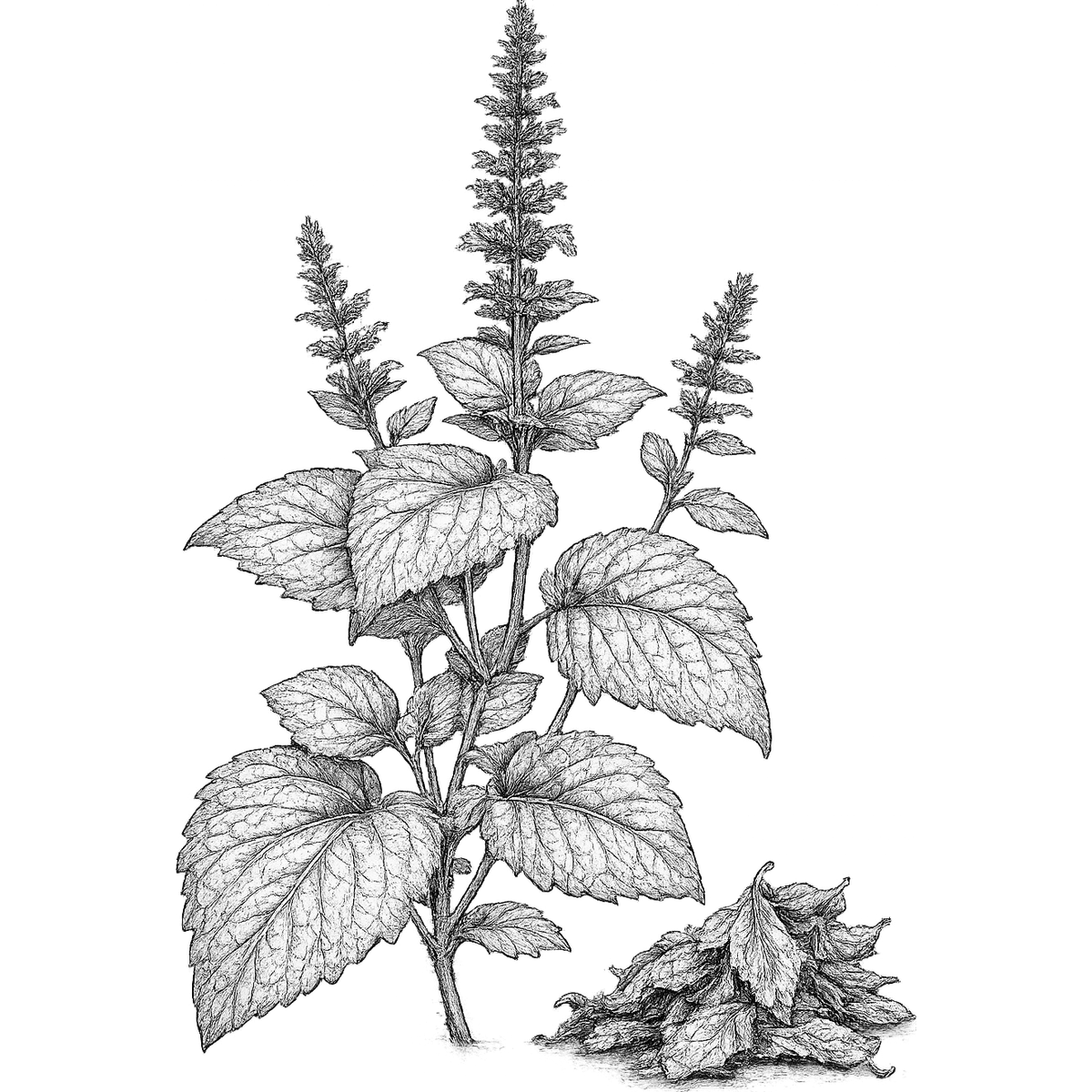
Light patchouli is produced from Pogostemon cablin by redistillation or refined vacuum processing of conventional dark patchouli oil, removing the heavy chromophores, patchouli pyridines, and norpatchoulenol fractions that produce the dark amber colour and characteristically damp, raw-earth character of traditional dark patchouli.[1] The dominant constituent, patchouli alcohol — a tricyclic sesquiterpene at approximately 35-40% of the oil — is substantially retained through redistillation, preserving the core therapeutic profile while yielding a markedly paler, cleaner, and more perfumery-accessible aroma.[1] Comprehensive mechanistic reviews confirm patchouli alcohol's neuroprotective, anti-inflammatory, anti-influenza, and antifungal activities across both traditional and refined preparations, supporting the use of light patchouli wherever the therapeutic benefits of patchouli alcohol are sought without the olfactory weight of the dark form.[2]
- Also Known As
- White Patchouli, Refined Patchouli, Redistilled Patchouli
- Family
- Earthy
- Perfumery Note
- Base
- Intensity
- Strong
- Extraction
- Steam Distillation
- Plant Parts
- Leaves
- Origins
- Indonesia, India
- Effect
- Relaxation & Stress Relief, Emotional Balance
- Aroma
- Woody, Clean, Earthy, Soft, Musky
- Applications
- Perfumery, Skincare, Aromatherapy
- Price
- $$$$Redistillation adds processing cost and yield loss on top of already-expensive standard patchouli; commands a notable premium over dark patchouli
References
- [1]Quantitative and physical evaluation of patchouli essential oils obtained from different sources of Pogostemon cablin — Swamy MK, Sinniah UR. Evidence-Based Complementary and Alternative Medicine, 2012
- [2]Potential benefits of patchouli alcohol in prevention of human diseases: A mechanistic review — Yang X, Zhang Y, Yang Y, Lim S, Cao Z, Ong J, Wang JW. Biomedicine & Pharmacotherapy, 2021