 Essential Nose
Mastic
Pistacia lentiscus
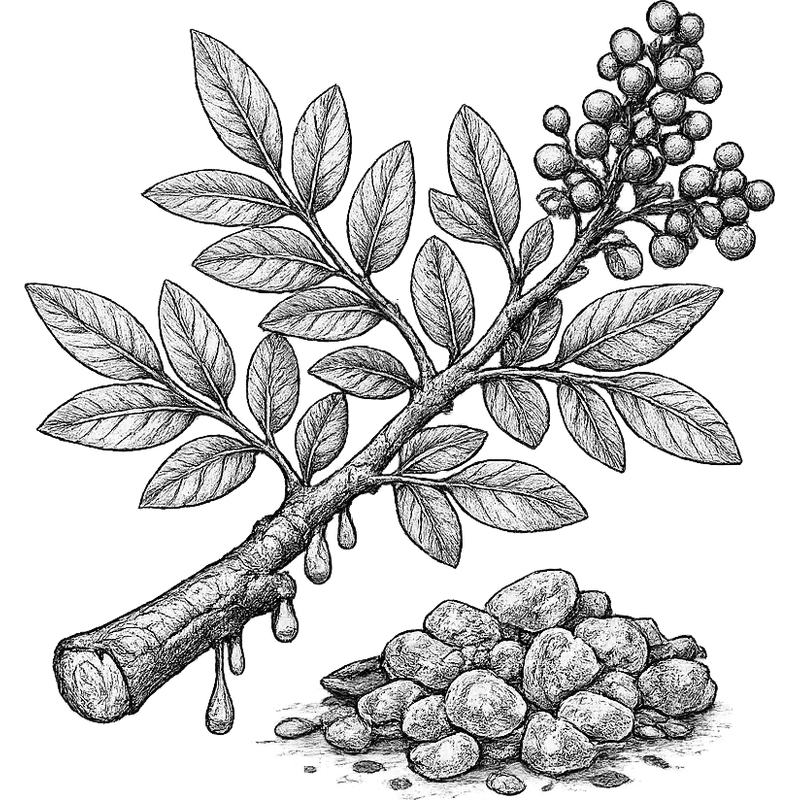
Mastic comes from Chios, and only from Chios, where the resin has been harvested for 2,500 years. It has Protected Designation of Origin status, which almost no aromatic material does. The oil is led by alpha-pinene and myrcene, so it smells piney and resinous with a soft warmth. Leaf oil held back the bacteria behind gum disease and Candida, and slowed two inflammatory enzymes.[1] It did that without harming the mouth cells it was tested on, which is why it appears in oral care.[1]
- Also Known As
- Lentisk, Mastix, Mastiha
- Family
- Woody
- Perfumery Note
- Middle
- Intensity
- Medium
- Extraction
- Steam Distillation
- Plant Parts
- Resin, Leaves
- Origins
- Greece, Italy, Morocco, Turkey
- Effect
- Grounding & Centering
- Aroma
- Piney, Fresh, Resinous
- Applications
- Diffusing & Inhalation, Perfumery & Fragrance Making
- Price
- $$$$Chios mastic resin is harvested by hand from individual trees in a single Greek island; the Protected Designation of Origin limits supply and the labor-intensive tapping process commands premium prices