 Essential Nose
Rose
Genus Rosa
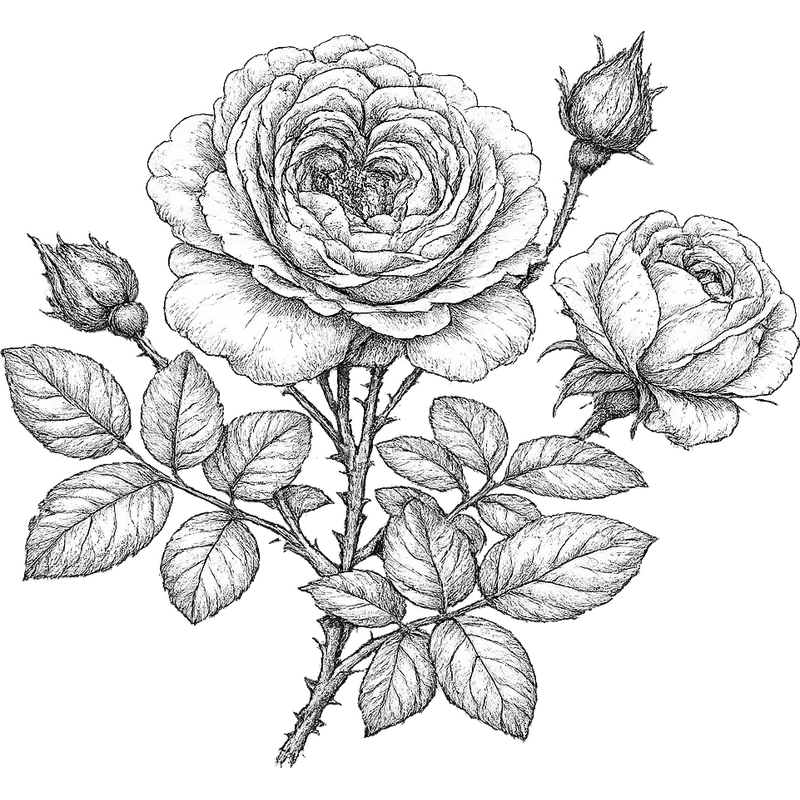
Rose scent rests on three alcohols, citronellol, geraniol and nerol, in proportions that shift with the variety and the field it grew in. How you extract it matters more than the rose does. Steam gives rose otto, lighter and faintly waxy, while solvent gives rose absolute, fuller and heavier because it captures the big molecules steam leaves behind. A review of the clinical evidence on rose oil specifically found it eased anxiety and lifted mood across a number of small trials.[1]
Rose Otto
Rosa x damascena
- Also Known As
- Damask Rose, Bulgarian Rose, Turkish Rose Otto
- Family
- Floral
- Perfumery Note
- Middle
- Intensity
- Strong
- Extraction
- Steam Distillation
- Plant Parts
- Flowers
- Origins
- Bulgaria, Turkey, Morocco, Iran
- Effect
- Sleep & Relaxation, Romance & Mood, Energy & Uplifting
- Aroma
- Floral, Rich, Sweet, Honey-like, Waxy
- Applications
- Diffusing & Inhalation, Skincare, Perfumery & Fragrance Making
- Price
- $$$$Steam distillation of Rosa damascena requires ~3-5 tonnes of hand-picked petals per kg of oil; the purest and most prized form of rose oil
Rose otto is the steam-distilled rose, and it goes cloudy and solid in a cold room. That is stearoptene, a natural wax that separates out and melts again in your hand. Citronellol and geraniol carry most of the scent, with nerol adding a green softness underneath.[2] In a randomised trial in burn patients, breathing it in lowered anxiety and improved sleep compared with usual care.[3] It takes thousands of petals to make a few drops, which is why it costs what it does.
Rose Absolute
Rosa x damascena
- Also Known As
- Rose Absolute de May, Bulgarian Rose Absolute
- Family
- Floral
- Perfumery Note
- Middle
- Intensity
- Very Strong
- Extraction
- Solvent Extraction
- Plant Parts
- Flowers
- Origins
- Bulgaria, Morocco, Turkey, France
- Effect
- Romance & Mood, Energy & Uplifting
- Aroma
- Floral, Rich, Deep, Honey-like, Darker than Otto
- Applications
- Diffusing & Inhalation, Skincare, Perfumery & Fragrance Making
- Price
- $$$$Solvent extraction of rose petals; still requires enormous quantities of hand-harvested flowers and yields a richer, waxier product than Otto
Rose absolute is washed out of the petals with a solvent, and it smells deeper and heavier than otto. The difference is one compound: phenylethyl alcohol, which can be three quarters of the absolute. In steam distillation that compound dissolves into the water and is mostly lost, which is why otto smells lighter. The gentler process also keeps vitamin E and beta-carotene that distillation destroys.[4] Almost all the clinical work on rose has used the distilled oil, so the absolute is a perfumery material rather than a studied one.
Rose Centifolia
Rosa centifolia
- Also Known As
- Cabbage Rose, May Rose, Provence Rose, Hundred-Petalled Rose
- Family
- Floral
- Perfumery Note
- Middle
- Intensity
- Strong
- Extraction
- Solvent Extraction
- Plant Parts
- Flowers
- Origins
- France (Grasse), Morocco, Egypt
- Effect
- Sleep & Relaxation, Romance & Mood, Energy & Uplifting
- Aroma
- Floral, Sweet, Delicate, Powdery, Lighter than Damascena
- Applications
- Diffusing & Inhalation, Skincare, Perfumery & Fragrance Making
- Price
- $$$$Rosa centifolia from Grasse is used almost exclusively for absolute production; hand-picked petals with a very low yield per tonne
The cabbage rose is grown for perfume in Grasse and in Morocco, and it gives a lighter, powdery scent than the damask. It shares the same building blocks but carries more of the small, bright molecules, up to a quarter of the extract against damascena's smaller share.[5] That is what lifts it and keeps it from turning heavy or jammy. Perfumers use it where damascena would be too rich. Reviews of the rose genus credit these extracts with calming effects and with protecting cells.[6]
Rose Damascena Absolute
Rosa x damascena
- Also Known As
- Damascus Rose Absolute, Attar of Roses Absolute, Bulgarian Rose Absolute
- Family
- Floral
- Perfumery Note
- Middle
- Intensity
- Medium
- Extraction
- Solvent Extraction
- Plant Parts
- Flowers
- Origins
- Bulgaria, Turkey, Morocco
- Effect
- Sleep & Relaxation
- Aroma
- Floral, Rich, Deep, Honey, Warm
- Applications
- Diffusing & Inhalation, Skincare, Perfumery & Fragrance Making
- Price
- $$$$Solvent-extracted Rosa damascena absolute; comparable yield to Rose Otto but a distinct aromatic profile preferred in modern perfumery
This is the damask rose absolute, an orange-red liquid rather than a pale oil. It is made in two steps: solvent first pulls out a waxy solid called the concrete, then alcohol lifts the scent out of that. Roughly three quarters of the result is phenylethyl alcohol, where the distilled otto is mostly citronellol and geraniol instead.[4] That single swap is the whole difference between the honeyed absolute and the brighter otto. The process also carries over vitamin E and carotenoids that the still leaves behind.[4]
References
- [1]Therapeutic efficacy of rose oil: A comprehensive review of clinical evidence - Mohebitabar S et al. Avicenna Journal of Phytomedicine, 2017
- [2]Volatile constituents of essential oil and rose water of damask rose (Rosa damascena Mill.) cultivars from North Indian hills - Verma RS, Padalia RC, Chauhan A, Singh A, Yadav AK. Natural Products Research, 2011
- [3]The effects of Rosa damascene aromatherapy on anxiety and sleep quality in burn patients: A randomized clinical trial - Mokhtari R, Mirbagher Ajorpaz N, Abdi K, Golitaleb M. Burns, 2023
- [4]Tocopherol, carotene, phenolic contents and antibacterial properties of rose essential oil, hydrosol and absolute - Ulusoy S, Bosgelmez-Tinaz G, Secilmis-Canbay H. Current Microbiology, 2009
- [5]Subcritical Extracts from Major Species of Oil-Bearing Roses - A Comparative Chemical Profiling - Dobreva A et al. Molecules, 2021
- [6]A Comprehensive Review on Phytochemistry and Pharmacology of Rosa Species (Rosaceae) - Fayaz F et al. Current Topics in Medicinal Chemistry, 2024