 Essential Nose
Sweet Birch
Betula lenta
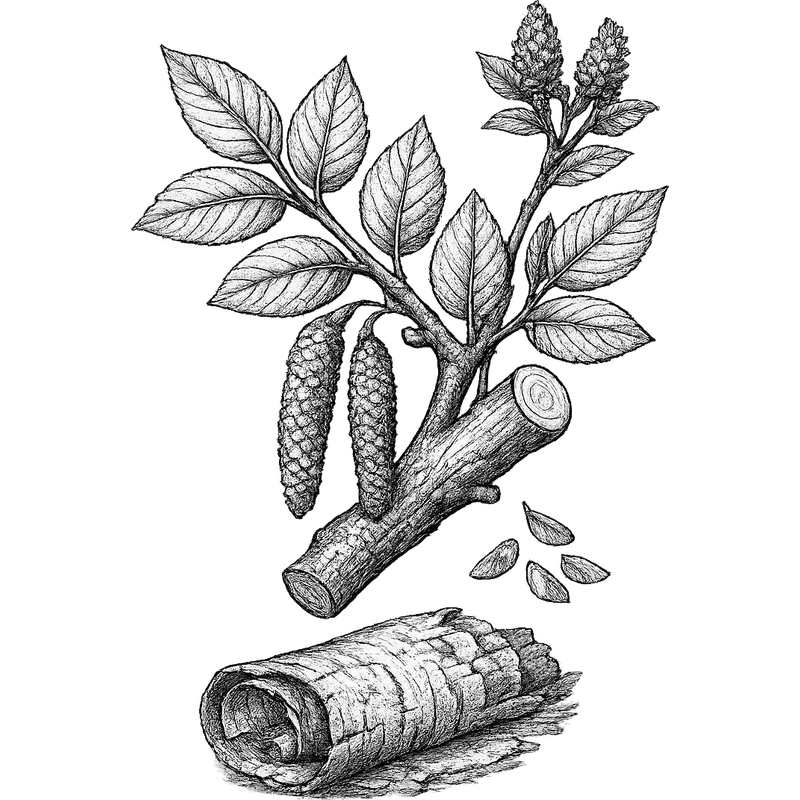
Sweet birch oil is almost pure methyl salicylate, the same as wintergreen, from a completely unrelated tree. The salicylate risks are identical: it passes through skin, thins the blood, and can poison at high doses.[2] But the bigger problem is that you almost certainly cannot buy it. A survey of 27 commercial samples sold as sweet birch found not one contained the four natural markers that distinguish real bark distillate.[1] Every sample was synthetic methyl salicylate or wintergreen sold under another name.[1]
- Also Known As
- Black Birch, Cherry Birch, Mahogany Birch
- Family
- Woody
- Perfumery Note
- Middle
- Intensity
- Strong
- Extraction
- Steam Distillation
- Plant Parts
- Bark
- Origins
- United States, Canada
- Effect
- Energy & Uplifting, Grounding & Centering
- Aroma
- Minty, Sweet, Medicinal
- Applications
- Diffusing & Inhalation, Skincare, Massage & Body
- Price
- $$$$Bark harvest requires felling or significant debarking of mature trees; declining natural populations and near-total market displacement by synthetic methyl salicylate make authentic material rare and accordingly priced