 Essential Nose
Tea Tree
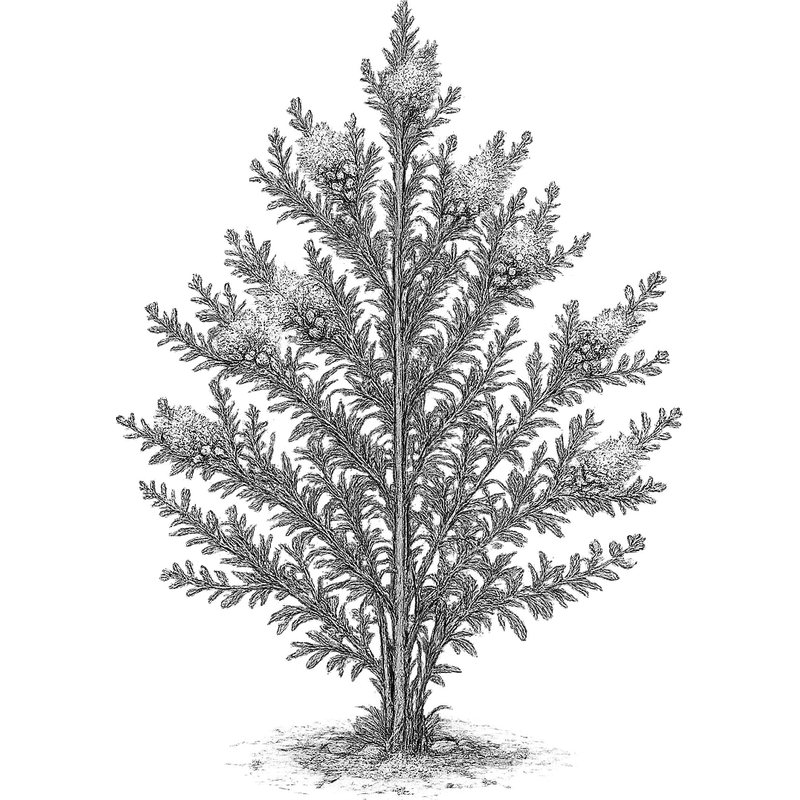
Tea tree oil comes from a paperbark tree on the coast of New South Wales. Its sharp, clean, medicinal smell comes from terpinen-4-ol, which does most of the work against bacteria and fungi. A trade standard, ISO 4730, sets a floor for terpinen-4-ol and a ceiling for 1,8-cineole, which signals a cut oil. In one wound study, adding tea tree vapour to standard care healed wounds faster than standard care alone.[3] A review of 46 randomised trials found the evidence strongest in dentistry and skin conditions, and thin for most other uses.[4]
Tea Tree
Melaleuca alternifolia
- Also Known As
- Melaleuca, Ti Tree
- Family
- Herbal
- Perfumery Note
- Middle
- Intensity
- Strong
- Extraction
- Steam Distillation
- Plant Parts
- Leaves, Twigs
- Origins
- Australia
- Effect
- Respiratory Support
- Aroma
- Medicinal, Fresh, Camphorous
- Applications
- Diffusing & Inhalation, Skincare, Haircare, Household & Cleaning
- Price
- $$$$Industrial-scale cultivation of Melaleuca alternifolia in Australia produces enormous volumes; among the most affordable essential oils on the market
This is the tea tree most people mean, steam-distilled from leaves into a sharp, clean oil that smells faintly of a first aid box. About a third of it is terpinen-4-ol. That one compound breaks open the outer membranes of bacteria and fungi, and calms the signals the body sends out when tissue is inflamed.[3] Reviews of the human evidence back its use on skin, in dental care and on wounds.[4]
Nerolina
Melaleuca quinquenervia
- Also Known As
- MQV Niaouli, Tea Tree Niaouli
- Family
- Herbal
- Perfumery Note
- Top
- Intensity
- Medium
- Extraction
- Steam Distillation
- Plant Parts
- Leaves, Twigs
- Origins
- Australia
- Effect
- Respiratory Support, Energy & Uplifting
- Aroma
- Fresh, Sweet, Floral
- Applications
- Diffusing & Inhalation, Skincare, Perfumery & Fragrance Making
- Price
- $$$$An Australian specialty oil related to Tea Tree; yield is moderate but production is localized
Nerolina smells soft, sweet and slightly rosy, closer to a flower than to a first aid kit. It comes from the same Australian tree as niaouli, but a different form of it. Niaouli is rich in 1,8-cineole, the sharp, camphor-like compound you also smell in eucalyptus. Nerolina is rich in nerolidol instead, which makes up roughly half to three-quarters of the oil. In lab tests nerolidol killed a range of airborne bacteria and fungi, and made Staphylococcus aureus easier to treat with several types of antibiotic.[5]
Niaouli
Melaleuca quinquenervia ct. cineole
- Also Known As
- MQV, Gomenol
- Family
- Herbal
- Perfumery Note
- Top
- Intensity
- Medium
- Extraction
- Steam Distillation
- Plant Parts
- Leaves
- Origins
- Madagascar, Australia, New Caledonia
- Effect
- Respiratory Support
- Aroma
- Fresh, Camphorous, Medicinal
- Applications
- Diffusing & Inhalation, Skincare
- Price
- $$$$Abundant wild-growing trees in Australia and Madagascar; high oil content in the leaves
Niaouli is the sharp, camphor-like cousin of nerolina, cut from the same tree but a different form of it. Roughly half the oil is 1,8-cineole, which clears the head and loosens mucus, so niaouli ends up in chest rubs and inhalers.[6] It also has a long, well-documented record against bacteria and fungi.[6] In animal studies, niaouli oil sharpened the immune system's targeted response and prodded white blood cells into releasing more signalling chemicals.[7] That is the modern reading of its long use as an immune tonic.
Cajeput
Melaleuca cajuputi
- Also Known As
- White Tea Tree, Cajuput
- Family
- Herbal
- Perfumery Note
- Top
- Intensity
- Strong
- Extraction
- Steam Distillation
- Plant Parts
- Leaves, Twigs
- Origins
- Indonesia, Malaysia, Vietnam
- Effect
- Respiratory Support, Energy & Uplifting
- Aroma
- Fresh, Camphorous, Medicinal
- Applications
- Diffusing & Inhalation, Massage & Body
- Price
- $$$$A close relative to Tea Tree that grows abundantly in Southeast Asia
Cajeput smells like tea tree that has been sharpened, bright and camphorous enough to clear a blocked nose on its own. Its main compounds, 1,8-cineole, terpinen-4-ol and alpha-terpineol, are much the same ones true tea tree relies on. It has been used as an all-purpose antiseptic since the eighteenth century. A review of the whole Melaleuca family found strong activity against bacteria and fungi throughout.[8] In lab tests, cajeput also worked against mycobacteria, including strains that resist standard drugs.[9]
Manuka
Leptospermum scoparium
- Also Known As
- New Zealand Tea Tree
- Family
- Herbal
- Perfumery Note
- Middle
- Intensity
- Strong
- Extraction
- Steam Distillation
- Plant Parts
- Leaves, Twigs
- Origins
- New Zealand
- Effect
- Sleep & Relaxation, Respiratory Support
- Aroma
- Sweet, Honey-like, Herbaceous, Woody
- Applications
- Diffusing & Inhalation, Skincare, Household & Cleaning
- Price
- $$$$Wild-harvested from lower-yield New Zealand plants; high-triketone East Cape oil is particularly scarce and commands a premium over mainstream Melaleuca tea tree
Manuka smells sweet and honeyed, closer to warm hay than to a medicine cabinet, and comes from a New Zealand shrub. Its oil is heavy in beta-triketones, a family of compounds tea tree does not make at all.[10] A survey of 261 plants across 87 sites confirmed that these are concentrated on the East Cape.[10] The triketones kill Gram-positive bacteria, and in lab work they killed the herpes simplex viruses too. Reviews back manuka for wounds and swelling, and treat it as its own oil rather than a tea tree stand-in.[11]
Kunzea
Kunzea ambigua
- Also Known As
- Tick Bush, White Kunzea, Poverty Bush
- Family
- Herbal
- Perfumery Note
- Middle
- Intensity
- Medium
- Extraction
- Steam Distillation
- Plant Parts
- Leaves, Twigs
- Origins
- Australia
- Effect
- Respiratory Support, Grounding & Centering
- Aroma
- Fresh, Herbaceous, Woody, Slightly Camphorous
- Applications
- Diffusing & Inhalation, Skincare, Massage & Body
- Price
- $$$$Small-scale production from wild-harvested Australian coastal scrubland; limited global supply keeps prices elevated relative to mainstream tea tree
Kunzea is the mildest of the Australian tea tree relatives, fresh and green with only a hint of camphor. Its main compounds are a-pinene, which smells of pine forest, and 1,8-cineole, the eucalyptus note. It carries neither the beta-triketones of manuka nor the heavy terpinen-4-ol of true tea tree, and lands softer on the nose.[12] Lab analysis found a mix of compounds not seen in its close relatives, tested there for insect repellency.[13] Australian aromatherapists reach for it mostly for sore muscles, stiff joints and frayed nerves.
Melaleuca Viridiflora
Melaleuca viridiflora
- Also Known As
- Broad-leaved Tea Tree, Green Paperbark, Broad-leafed Paperbark
- Family
- Herbal
- Perfumery Note
- Middle
- Intensity
- Medium
- Extraction
- Steam Distillation
- Plant Parts
- Leaves, Twigs
- Origins
- Australia, Papua New Guinea
- Effect
- Sleep & Relaxation, Respiratory Support
- Aroma
- Fresh, Herbaceous, Woody, Mildly Medicinal
- Applications
- Diffusing & Inhalation, Skincare
- Price
- $$$$A specialty Australian Melaleuca oil with limited commercial production outside niche cosmetic supply chains; more expensive than mainstream tea tree but not as rare as high-triketone manuka
This oil gave viridiflorol its name, and viridiflorol gives the oil its soft, woody warmth. Alongside it sit 1,8-cineole and only a little terpinen-4-ol, the sharp compound that dominates ordinary tea tree. The result is gentle enough to leave on the skin, which is why it turns up in hand creams and body lotions. French pharmacies have sold it as gomenol for topical antiseptic and chest use since at least 1948.[14] Across the wider Melaleuca family, these oils have a well-established record against bacteria and fungi.[8]
Tea Tree Lemon
Leptospermum petersonii
- Also Known As
- Lemon Tea Tree, Lemon-Scented Tea Tree, Lemon-Scented Teatree
- Family
- Herbal
- Perfumery Note
- Top
- Intensity
- Strong
- Extraction
- Steam Distillation
- Plant Parts
- Leaves, Twigs
- Origins
- Australia
- Effect
- Respiratory Support, Energy & Uplifting
- Aroma
- Lemon, Citrus, Fresh, Sharp
- Applications
- Diffusing & Inhalation, Household & Cleaning
- Price
- $$$$A boutique Australian crop grown at far smaller scale than Melaleuca alternifolia, keeping supply and price moderate
Despite the name, this is not a tea tree at all, but a different Australian shrub in the same plant family. It smells intensely of lemon, closer to lemon verbena than to anything medicinal. That comes from citral, which makes up over half the oil, backed by citronellal and citronellol. In lab tests it cut the sticky films Staphylococcus aureus builds on surfaces by almost 80%, at low doses.[15] Its vapour alone broke down the outer membranes of Candida albicans and Aspergillus fumigatus, two common fungi, without ever touching them.[16]
References
- [1]The effect of tea tree oil (Melaleuca alternifolia) on wound healing using a dressing model - Chin KB, Cordell B. Journal of Alternative and Complementary Medicine, 2013
- [2]Efficacy and safety of Melaleuca alternifolia (tea tree) oil for human health: A systematic review of randomized controlled trials - Kairey L, Agnew T, Bowles EJ, Barkla BJ, Wardle J, Lauche R. Frontiers in Pharmacology, 2023
- [3]Melaleuca alternifolia (Tea Tree) oil: a review of antimicrobial and other medicinal properties - Carson CF, Hammer KA, Riley TV. Clinical Microbiology Reviews, 2006
- [4]A review of applications of tea tree oil in dermatology - Pazyar N et al. International Journal of Dermatology, 2013
- [5]Antimicrobial activity of nerolidol and its derivatives against airborne microbes and further biological activities - Krist S et al. Natural Product Communications, 2015
- [6]Nanoemulsification Improves the Pharmaceutical Properties and Bioactivities of Niaouli Essential Oil - Shakeel F et al. Pharmaceutics, 2021
- [7]Essential oil of niaouli preferentially potentiates antigen-specific cellular immunity and cytokine production by macrophages - Serafino A et al. Journal of Leukocyte Biology, 2008
- [8]Plants of the Melaleuca Genus as Antimicrobial Agents: From Farm to Pharmacy - Mulyaningsih S et al. Planta Med, 2017
- [9]In vitro activity of Melaleuca cajuputi against mycobacterial species - Astuti P et al. J Herb Med, 2019
- [10]Essential oils from New Zealand manuka: triketone and other chemotypes of Leptospermum scoparium - Porter NG, Smale PE, Nelson MA, Hay AJ, van Klink JW, Dean CM. Phytochemistry, 2004
- [11]Manuka Oil-A Review of Antimicrobial and Other Medicinal Properties - Hammer KA. Pharmaceuticals, 2020
- [12]Pharmacological and antimicrobial studies on different tea-tree oils (Melaleuca alternifolia, Leptospermum scoparium or Manuka and Kunzea ericoides or Kanuka), originating in Australia and New Zealand - Lis-Balchin M, Hart S, Deans SG. Phytotherapy Research, 2000
- [13]Evaluation of repellent properties of volatile extracts from the Australian native plant Kunzea ambigua against Aedes aegypti - Webb CE, Doggett SL, Russell RC. Journal of Medical Entomology, 2010
- [14]Experimental and clinical data on gomenol (essence of Melaleuca viridiflora selected) - Marche J. J Med Chir Prat, 1948
- [15]Chemical Composition and Biological Activities of the Essential Oils of Leptospermum petersonii and Eucalyptus gunnii - Caputo L et al. Frontiers in Microbiology, 2020
- [16]The effect of Leptospermum petersonii essential oil on Candida albicans and Aspergillus fumigatus - Hood JR, Burton DM, Wilkinson JM, Cavanagh HMA. Medical Mycology, 2010