 Essential Nose
Valerian
Valeriana officinalis
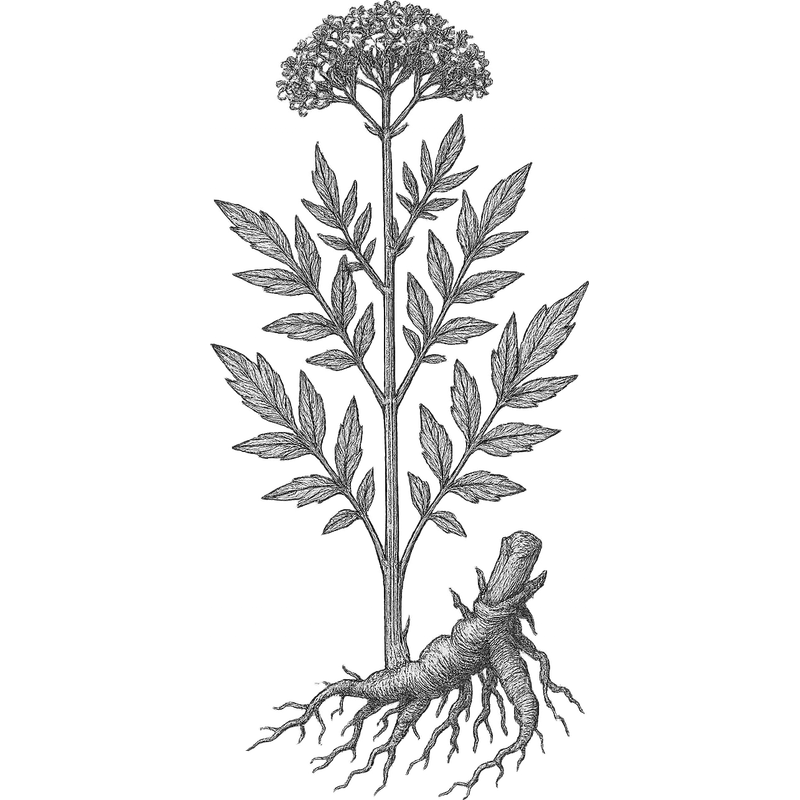
Valerian oil smells strongly of old socks, which is not a criticism so much as a warning. Bornyl acetate and a set of heavy, slow-evaporating compounds give it that stale, earthy, musky character. Valerenic acid, the compound valerian capsules are standardised to, is not volatile and does not come over into the oil. So the oil is not the same thing as a valerian supplement. Inhaled bornyl acetate reduced activity in animals,[1] and work on the oil itself points at serotonin pathways for sleep.[2]
- Also Known As
- Garden Valerian, All-Heal
- Family
- Herbal
- Perfumery Note
- Base
- Intensity
- Very Strong
- Extraction
- Steam Distillation
- Plant Parts
- Roots
- Origins
- Belgium, France, India
- Effect
- Sleep & Relaxation
- Aroma
- Earthy, Musky, Woody
- Applications
- Diffusing & Inhalation, Massage & Body
- Price
- $$$$More abundant than the European variety; used heavily in traditional medicine